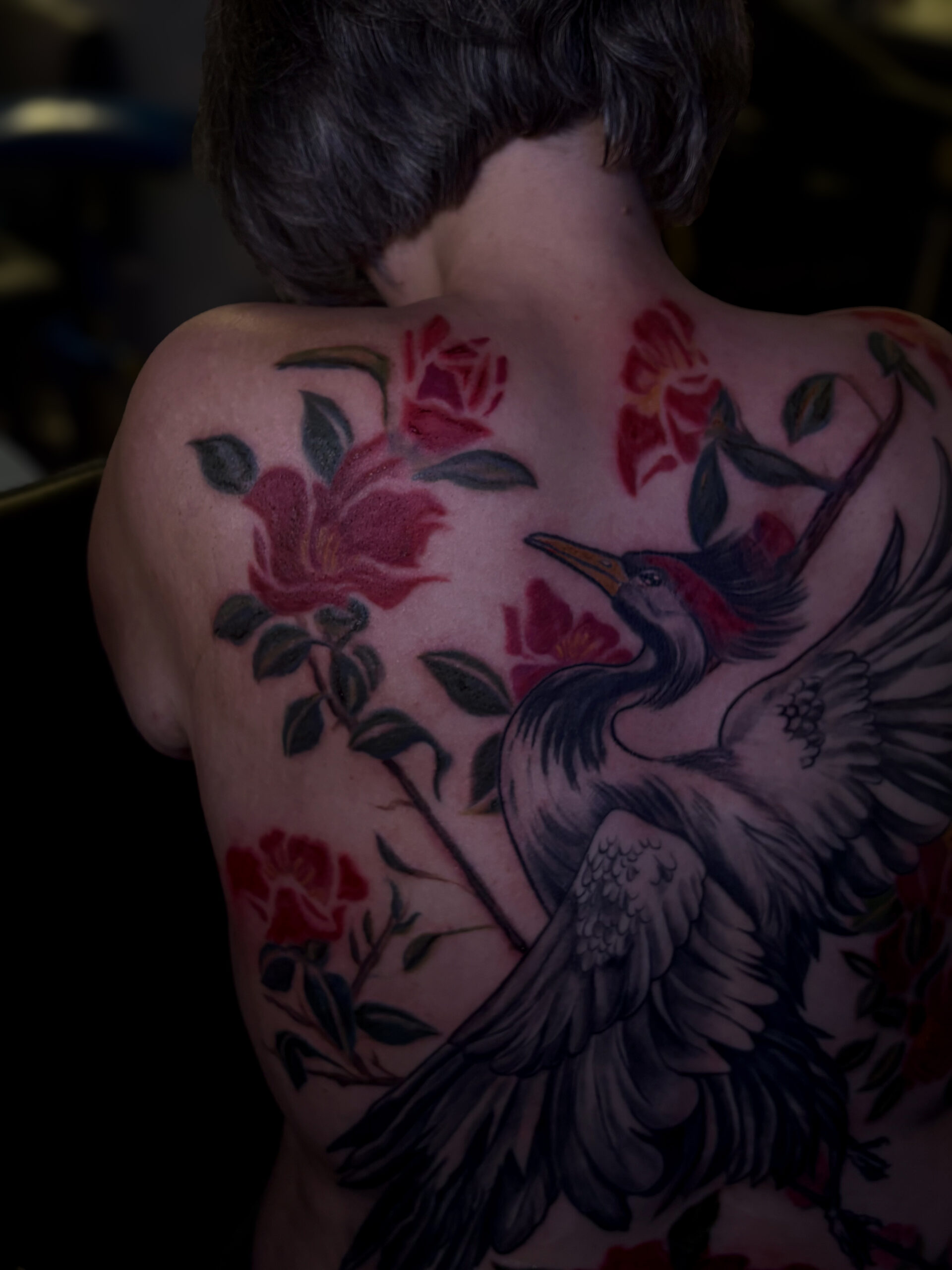
Hello everyone!
I realized that I had already mentioned Cicaplast, scratching tattoos, color and aging here, but that my general article on aftercare for tattoos had remained far too “practical information”. While in reality, that’s probably the topic I explain the most often after a session.
A tattoo doesn’t stop when you leave the studio. The days that follow count a lot, because the skin will close, dry out, sometimes peel off, and continue to evolve before the tattoo really takes on its final appearance.
And above all, you don’t need ten different products. Over the years, I’ve rather learned to keep it simple and let the skin work its magic.
The first hours after the tattoo
Just after the session, the skin can be red, sensitive, a little warm and sometimes shed some plasma or ink. This is normal after being worked on for several hours, especially on a large piece.
Once the protection has been removed as instructed by the studio, I recommend using a mild cleanser to gently clean the area with warm water, then patting dry with a towel. There’s no need to rub, much less to roll the towel in all directions.
For cleaning, I mainly use the Cicaplast Lavant B5+ From La Roche-Posay. The brand had sent me the Lavant and the Baume B5+ to the studio, and I gave a full review of both in my article on Cicaplast after a tattoo.
What I wear during the first few days
During the first few days, I prefer to stick with a very light routine. I prefer to use’Aquaphor in a very thin layer, simply to provide comfort to the skin without covering it with a large amount of product.
That really is the motto for me: less product. We often tend to think that a tattoo that shines brightly is a well-hydrated tattoo, when there’s no point in leaving a thick layer of cream on all day.
I clean, dry gently, apply a small amount if the skin needs it and then leave it alone. That’s often the most difficult part, especially when it’s the first tattoo and you want to look at it every five minutes.
After three to four days, the skin begins to change.
In my experience, it usually takes about three to four days for the epidermis to start to close up again. This is not an absolute rule, because a small fine tattoo, a large colored piece of jewelry, or a very busy area won’t necessarily evolve in exactly the same way.
It is from this phase that I can proceed with a treatment like the Cicaplast Baume B5+, When the surface is well sealed and the skin starts to become drier or tighter, a thin layer is sufficient.
The most important thing is really to look at the condition of the skin and follow the instructions given after the session rather than trying to apply exactly the same schedule to all the tattoos.
When the tattoo starts to peel and scratch
A few days later, the tattoo can start to peel off and sometimes itch. This is often the moment when clients start sending me photos wondering if everything is normal.
The most important thing at this stage is not to pull off the small skin or scratch the area. Even if a small piece of skin protrudes and it’s been itching for twenty minutes, let it go on its own.
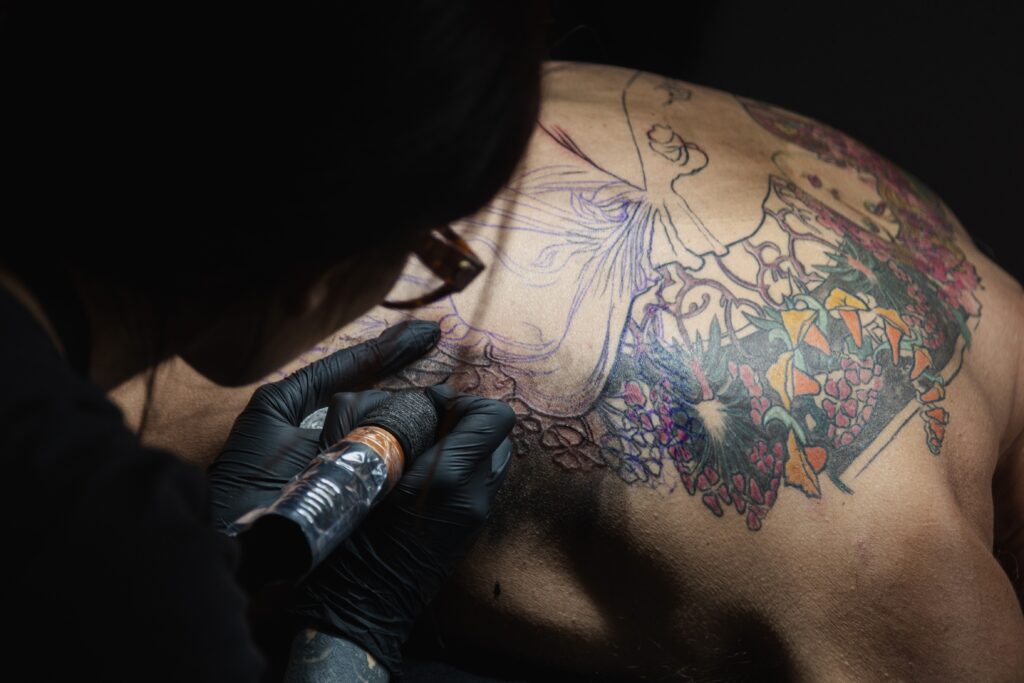
In fact, I dedicated an entire article to this stage if you are in the middle of it: my tattoo is peeling and scratching, is that normal?
What I avoid during healing
During this period, I avoid especially anything that can irritate or weaken the skin: baths, the pool, direct sunlight, very tight clothes that rub against the area, and sessions where I sweat profusely.
I also pay attention to the clothing depending on the location of the tattoo. A fabric that rubs against a freshly tattooed area all day can quickly become very uncomfortable, so I prefer something that is clean, flexible, and fairly large.
For the sun, I am particularly vigilant once the tattoo has healed, because UV rays play a huge role in how colors and blacks will evolve over time.
How long does it take for a tattoo to heal?
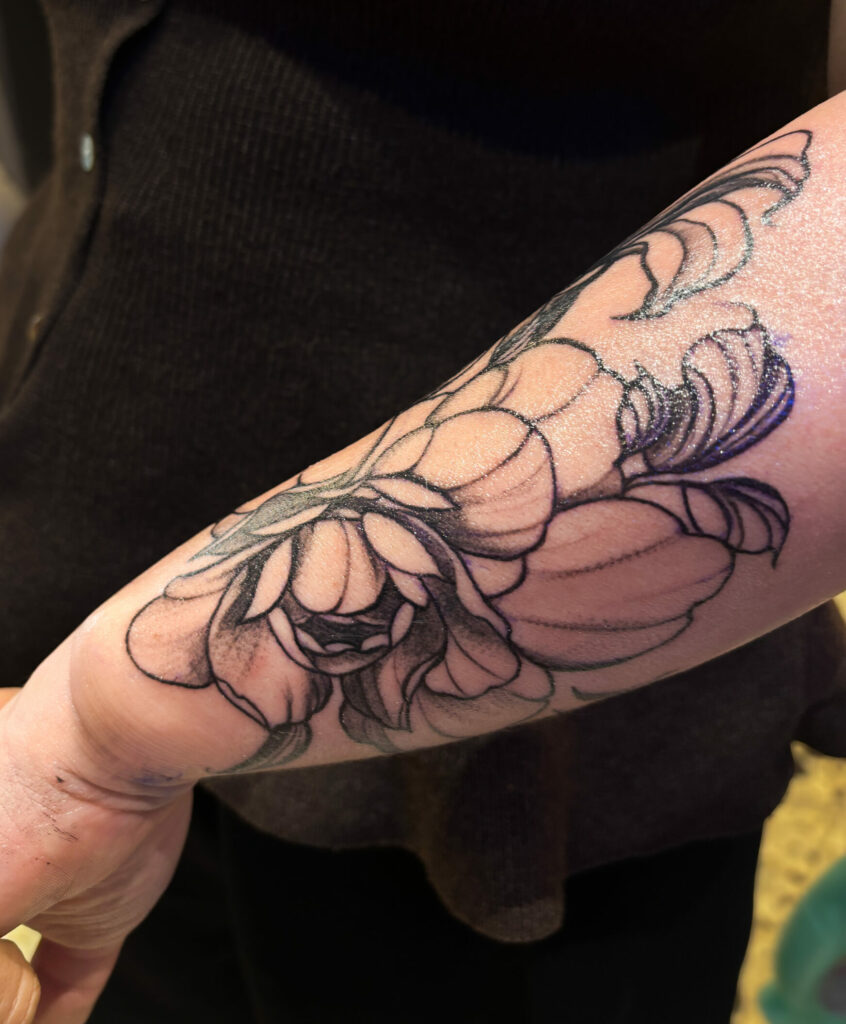
The surface may seem closed quite quickly, but the skin continues to evolve in depth for longer. That’s also why you shouldn’t judge the final result of a tattoo after just a few days.
At first the colors may appear very vivid, then become more dull during the peeling process, before returning to a much more natural appearance once the skin has stabilized. On larger areas, this is even more noticeable.
If you are interested in the color retention, I have also detailed all of that in my article on The aging of a colored tattoo.
Ultimately, the less we complicate things, the better it is
Over the years, my approach to skincare has really simplified. Gently cleansing, moisturizing sparingly, avoiding unnecessary touching of the area, and letting the skin do its own thing: that’s often more than enough.
And if you’re still at the stage where you’re looking for the person to entrust your project to, I’ve also written an article about how to choose your tattoo artist. Good healing is very important, but it starts with a well-executed tattoo and a clear protocol after the session.
FAQ: Care and healing after a tattoo
When should you start applying cream to a tattoo?
In my routine, I apply a very thin layer of Aquaphor during the first few days. Then I switch to a treatment like Cicaplast Baume B5+ when the epidermis starts to seal, usually around three to four days depending on the tattoo.
Is it normal for a tattoo to peel and scratch?
Yes, this can be part of the healing process. The most important thing is not to scratch or pull off the small skin layers. If the pain increases, the redness spreads, there is significant warmth, an unusual discharge, or fever, it is better to seek medical advice.
Can you take a bath or go to the pool after a tattoo?
I avoid baths, swimming pools, and immersions during healing. I prefer a quick shower and gentle cleansing of the area until the skin is properly closed.
Can you exercise after a tattoo?
It depends a lot on the area being tattooed and the sport being practiced. I avoid rubbing in particular, movements that directly pull on the area, and excessive sweating on a still-fresh tattoo.















0 commentaires
Be the first to leave a comment.