Hello!
We spent the weekend at the Hôtel Le Corbusier, right inside Marseille’s Cité Radieuse. It was my first visit and, from the moment we arrived, I couldn’t quite decide whether we were in a block of flats, a museum or a hotel. The answer is a bit of all three.
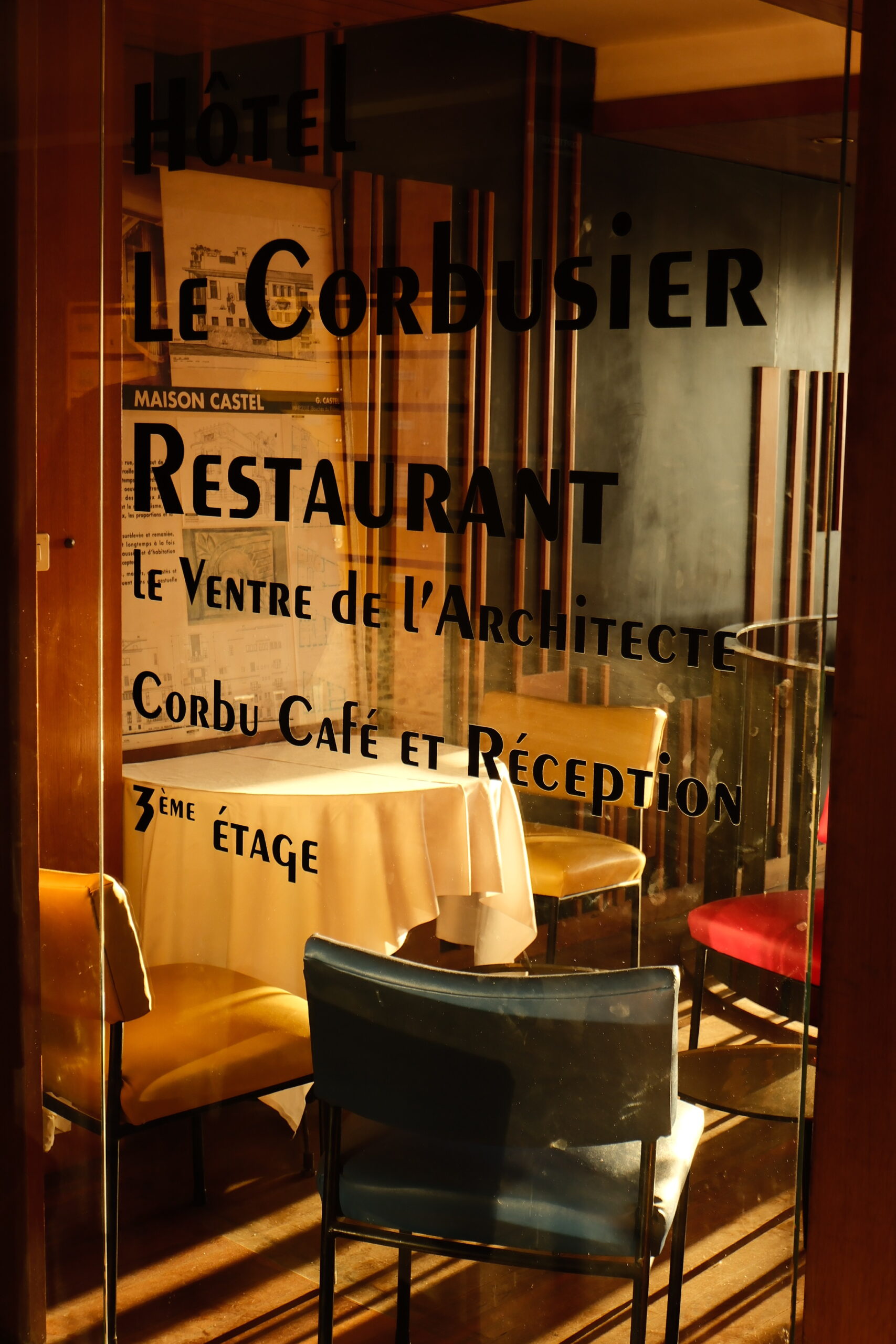
The entrance feels nothing like a conventional hotel. There was an exhibition in the lobby, residents passing through with their shopping, and a lift to take before you even reached reception. You quickly realise you aren’t simply sleeping at the Cité Radieuse; you’re staying among people who live, work and use these lifts every day.
€275 a night: the building is not enough to justify the price
I’ll be honest: we paid €275 for the night and, for me, the experience didn’t live up to the price. The air conditioning looked older than I am and didn’t work. Neither did the television. The bed was on wheels and had a slight hospital-bed air about it. It was comfortable, thankfully, but at that price you inevitably notice every detail.
The hotel describes its approach as ‘vintage’ and says some imperfections have deliberately been preserved. I completely understand the idea. I had no desire to sleep in a room refurbished like any other modern hotel, with three decorative cushions and a fake designer chair in the corner. But preserving a building’s history doesn’t stop the air conditioning and television from working, or rule out a little careful maintenance.
A wonderful bedroom to photograph
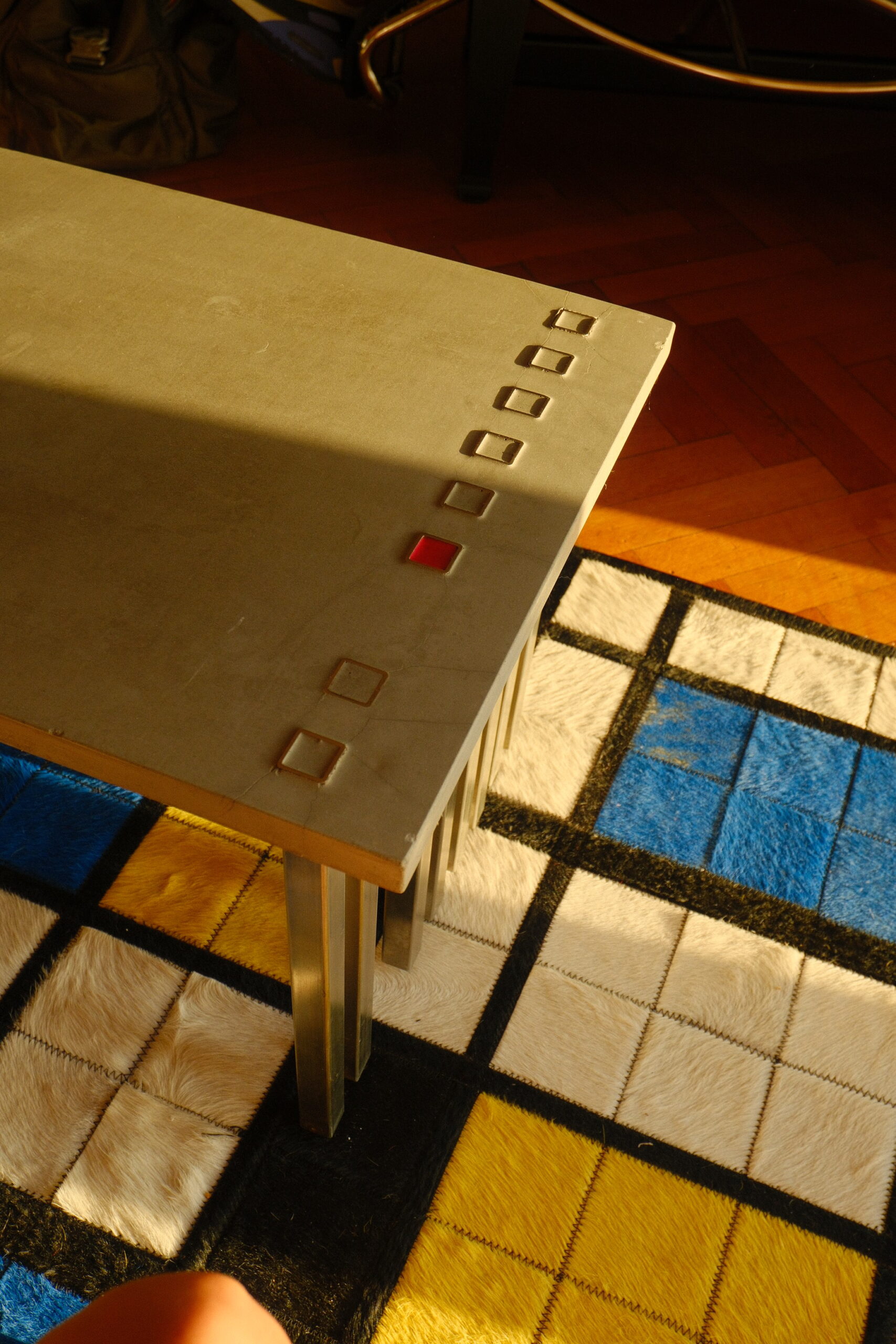
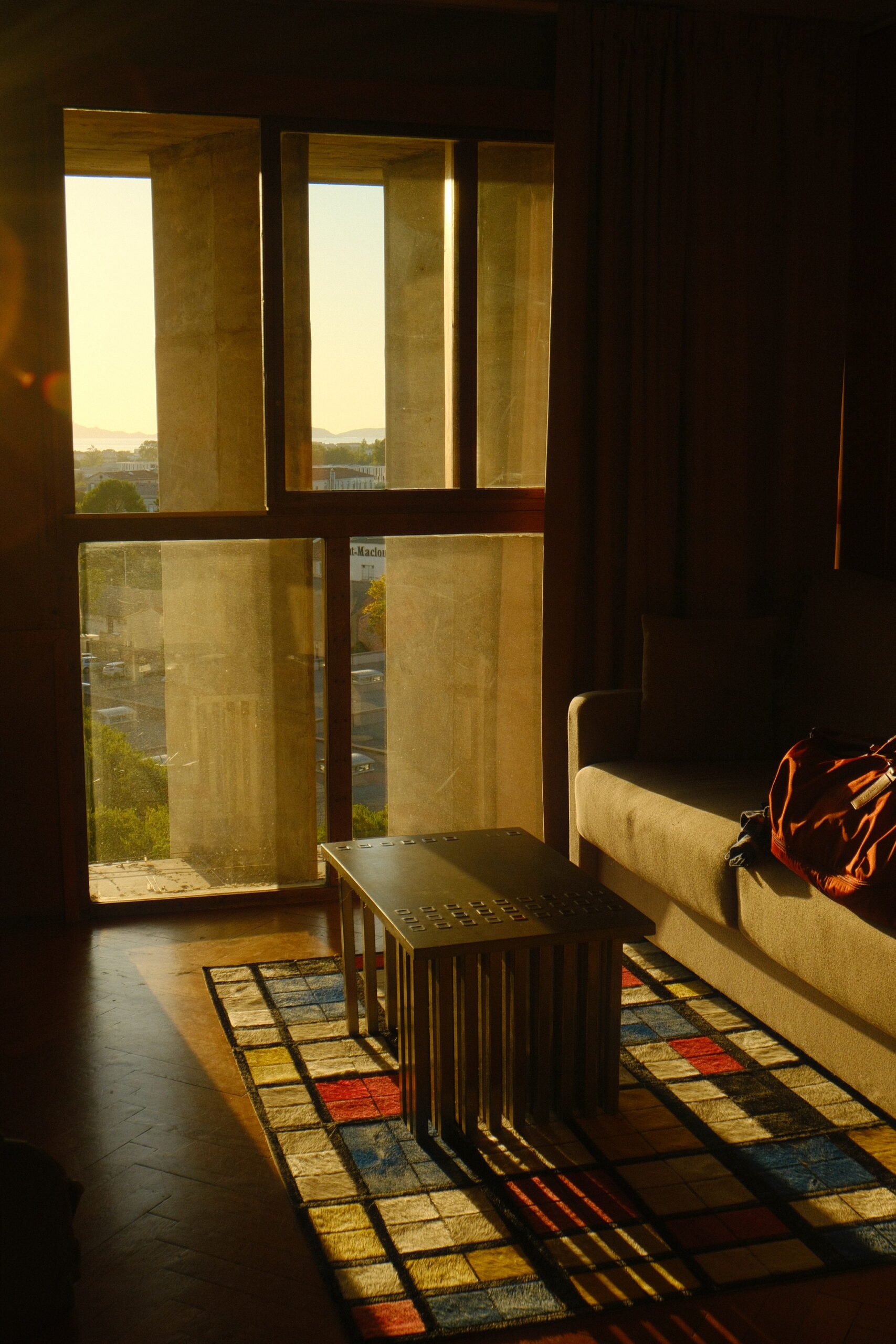
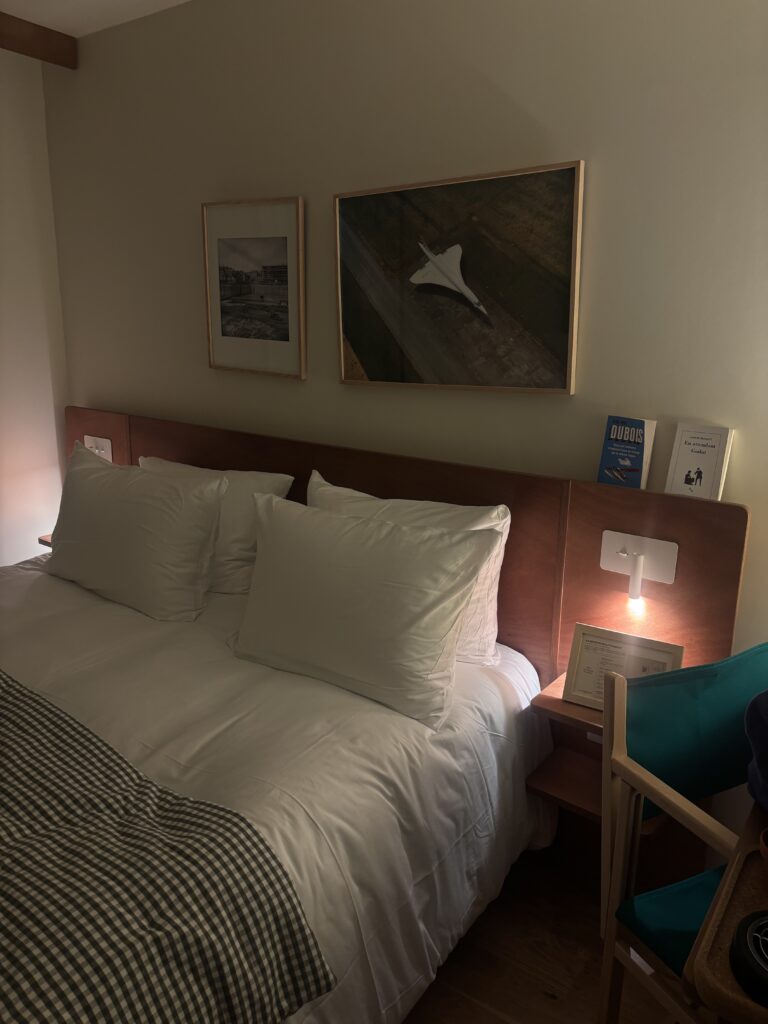
This is where my feelings become slightly contradictory. The room photographed beautifully. The colours, timber, storage and furniture made it feel as though we had stepped into Le Corbusier’s world, rather than a hotel trading on his name. I made photographs I genuinely love because nothing had been smoothed over to match current hotel trends.
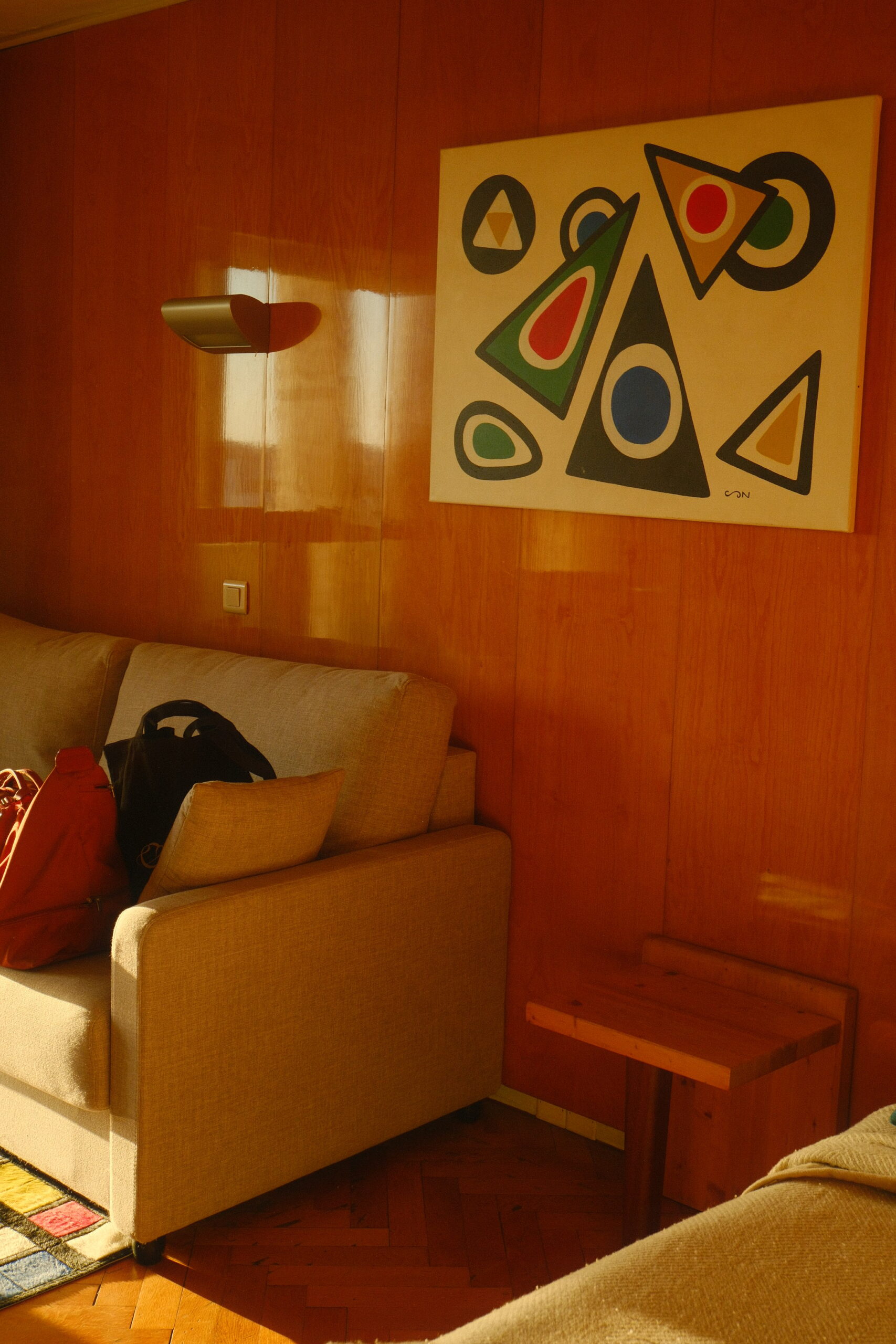
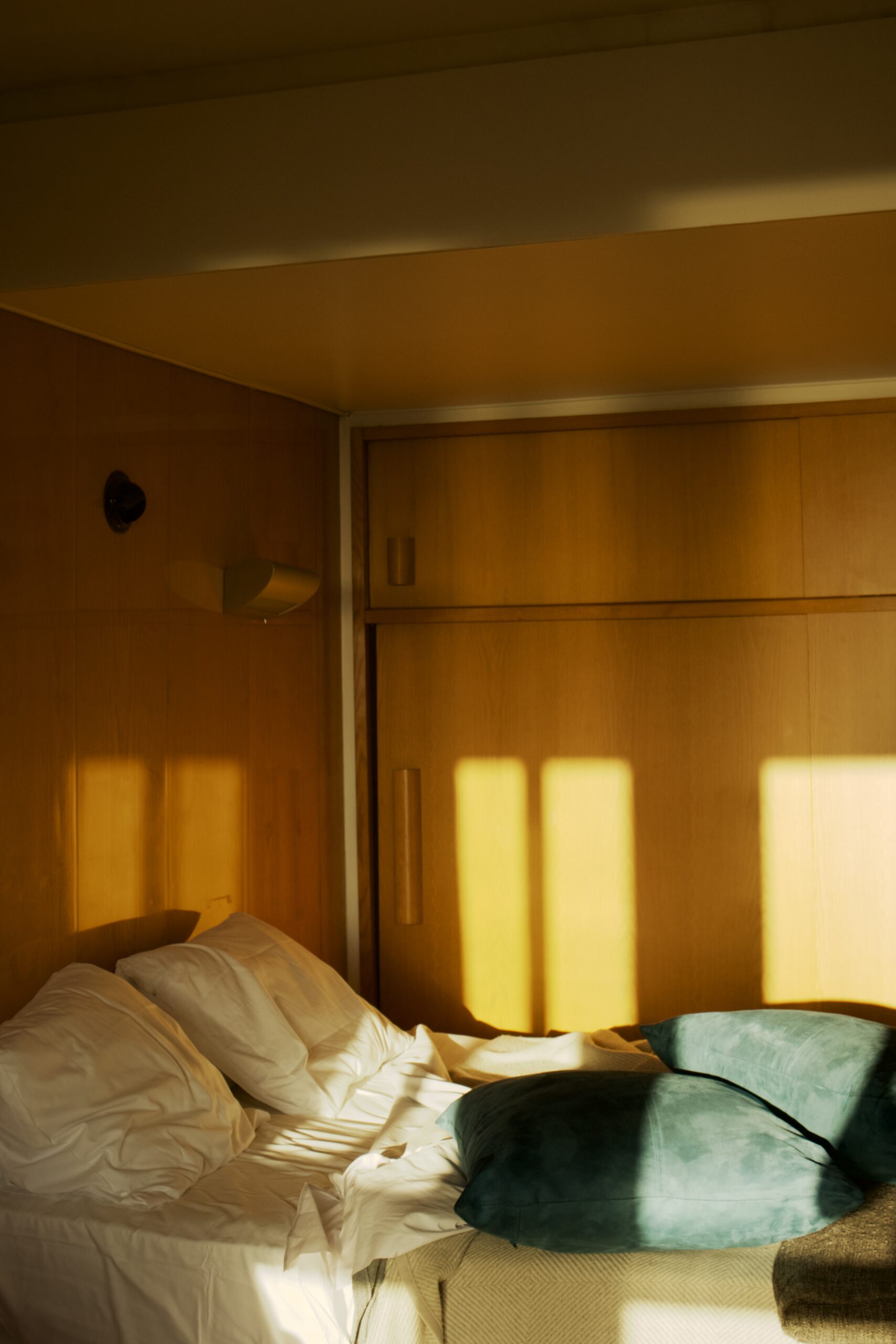
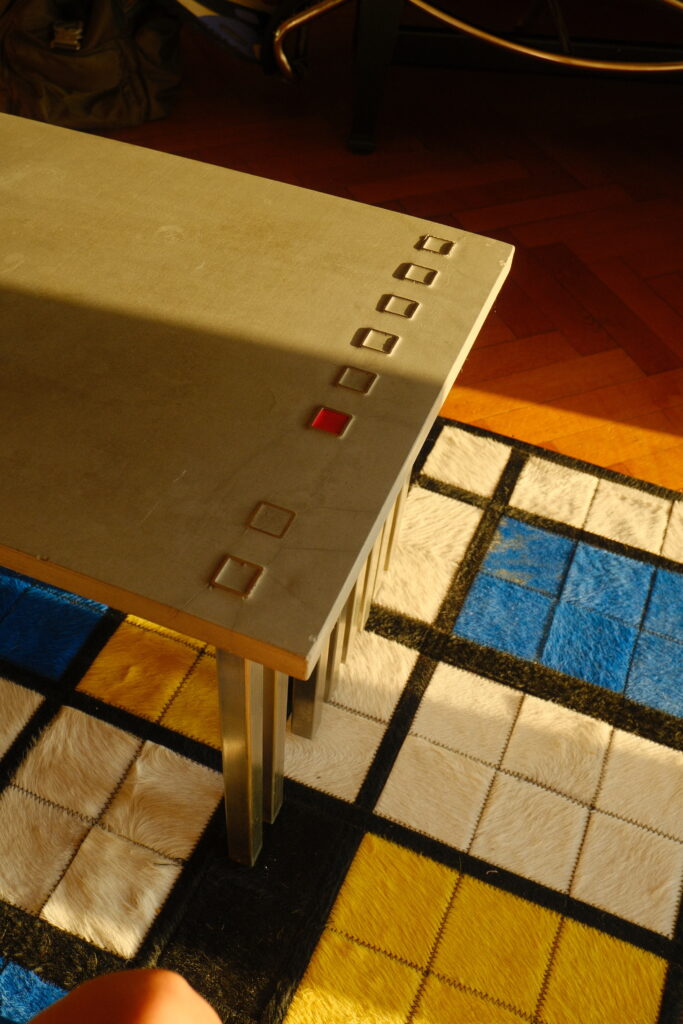
Le Corbusier's chaise longue certainly makes an impression. We then found the same model in the duplex we visited, but here it contributes more to the bedroom decor. The original elements, or those kept in keeping with the original spirit, make it possible to understand the proportions and the way in which each function has been integrated into a fairly small space.
The service, much less memorable than the architecture
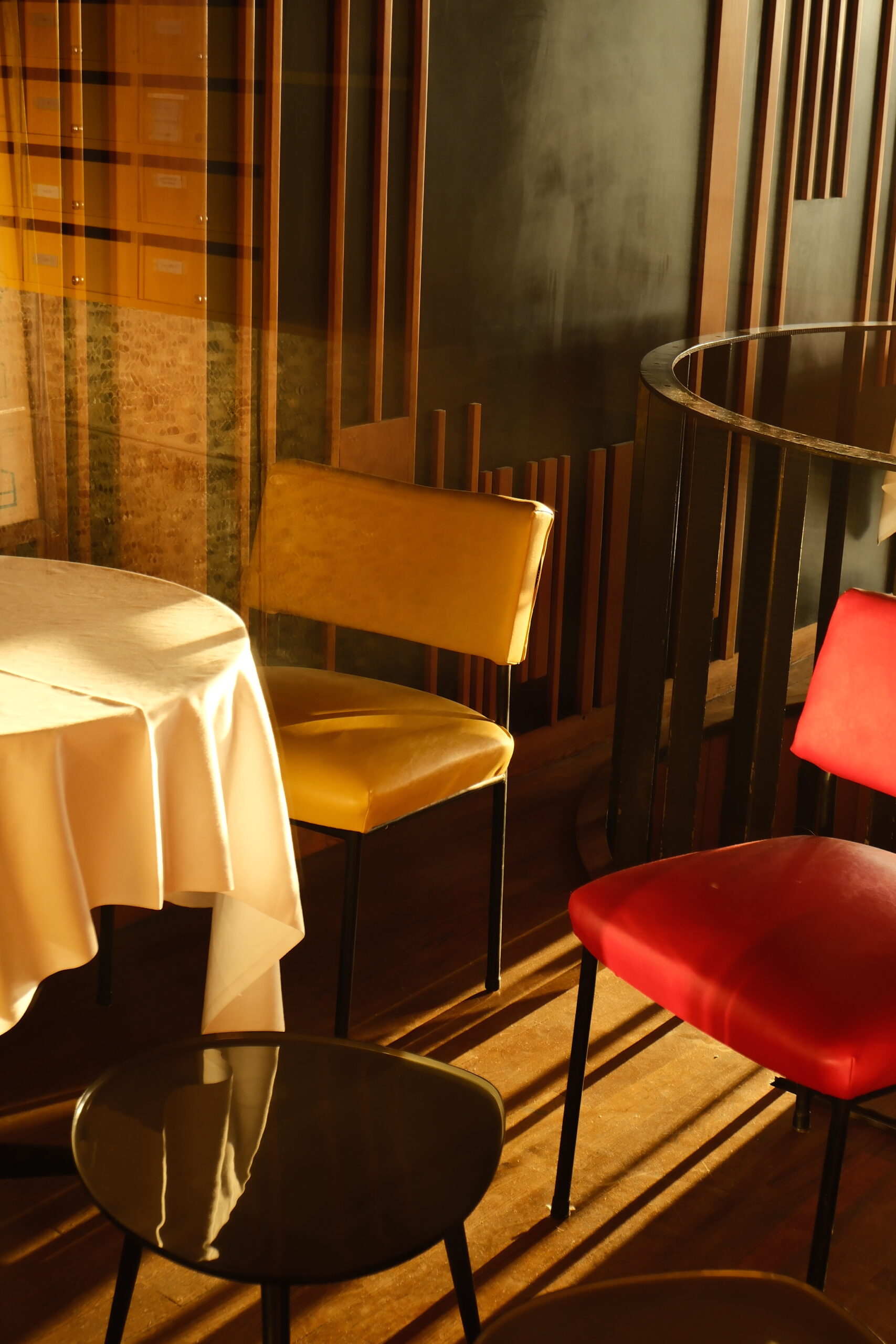
The service left a far less positive impression. Two double coffees, two croissants and an orange juice came to €23. Right… that felt rather steep. We were then told off because our table hadn’t been cleared. At €275 a night, I hadn’t expected to add waiting tables to the itinerary.
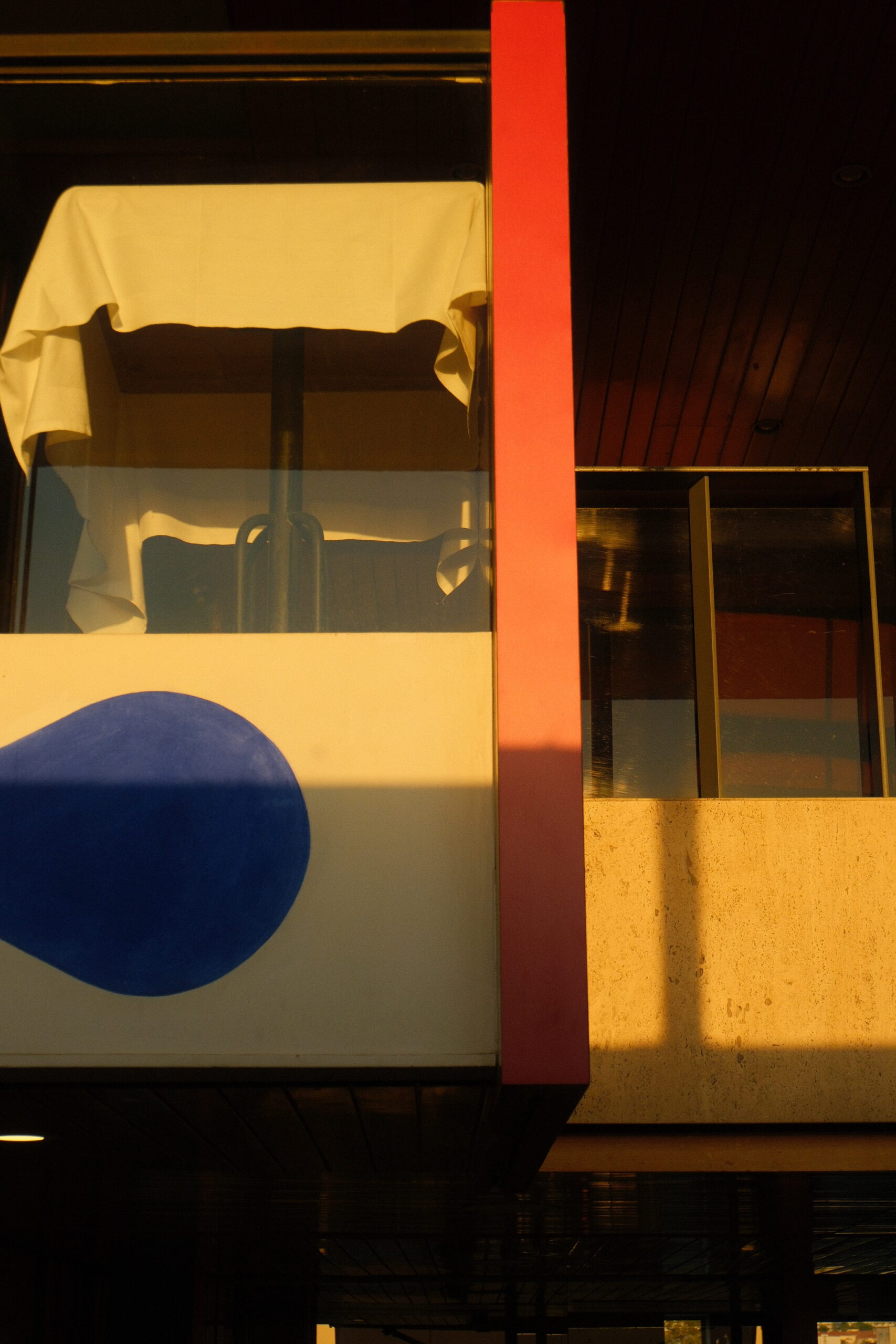
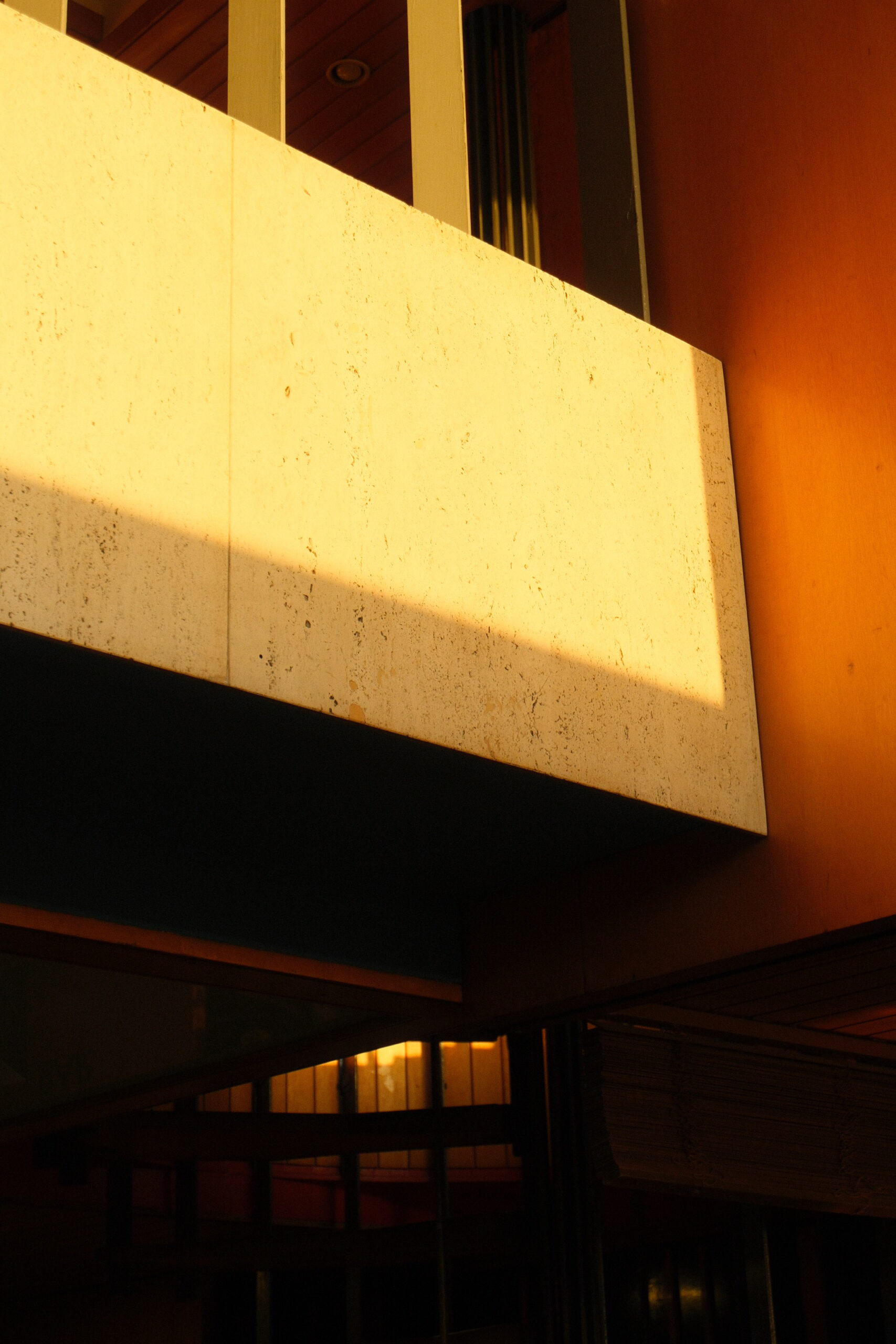
Still, as I said, it is an experience. This is Marseille, and it feels a little like arriving in a village before walking into the local hotel: you meet characters, each with their own manner and their own way of doing things. Here, you feel slightly misplaced in both space and time. It is very particular, and I suspect some guests come for precisely that.
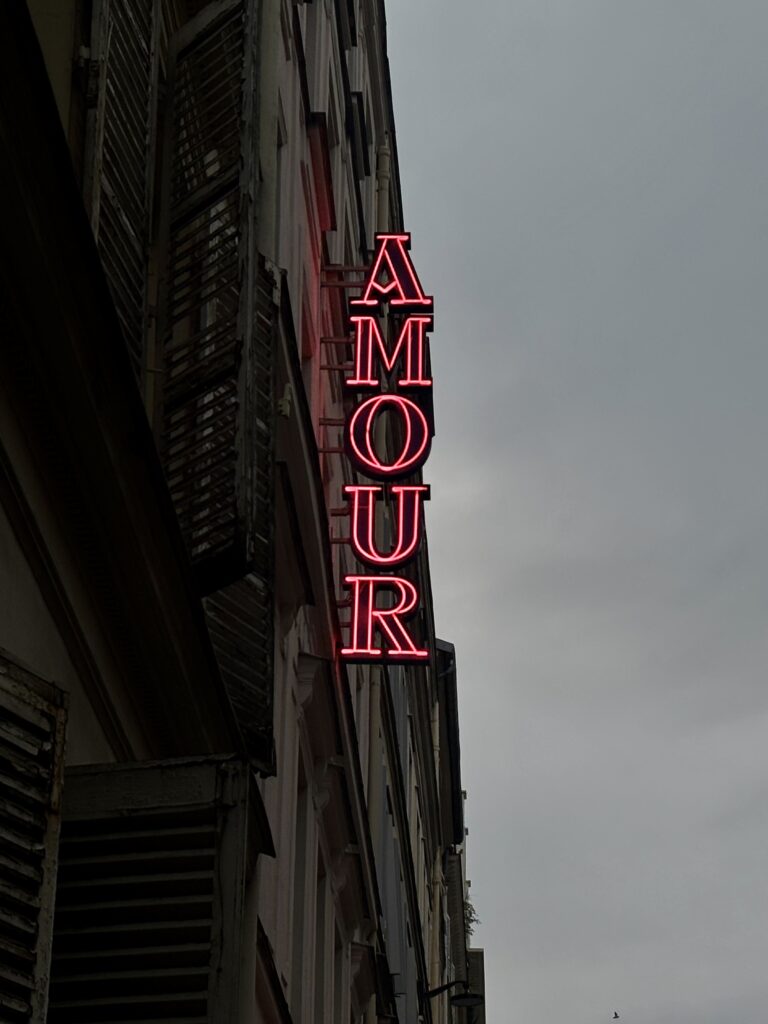
That is actually what I like about’Hotel Amour in Nice : another unconventional place full of objects, corners and things to examine. You want to open doors, look through the books and discover where everything came from. The difference is that in Nice the service genuinely matched the price, which inevitably changes how a stay feels.
It is a shame, particularly because it wouldn’t take much for the hotel to live up to the building. I’m not asking for every mark of age to be erased or the rooms turned into a polished Parisian boutique hotel. I simply wanted the facilities to work and the welcome to feel more attentive.
Sleeping in the middle of the Cité Radieuse
Despite all that, sleeping inside the Cité Radieuse is extraordinary. At night, you walk through the same dark corridors as the residents. Step outside your room and you might find an orthopaedic clinic, a shop or simply somebody coming home. There could be an opening in the lobby. Up on the roof, residents take a yoga class while other people look out over Marseille.
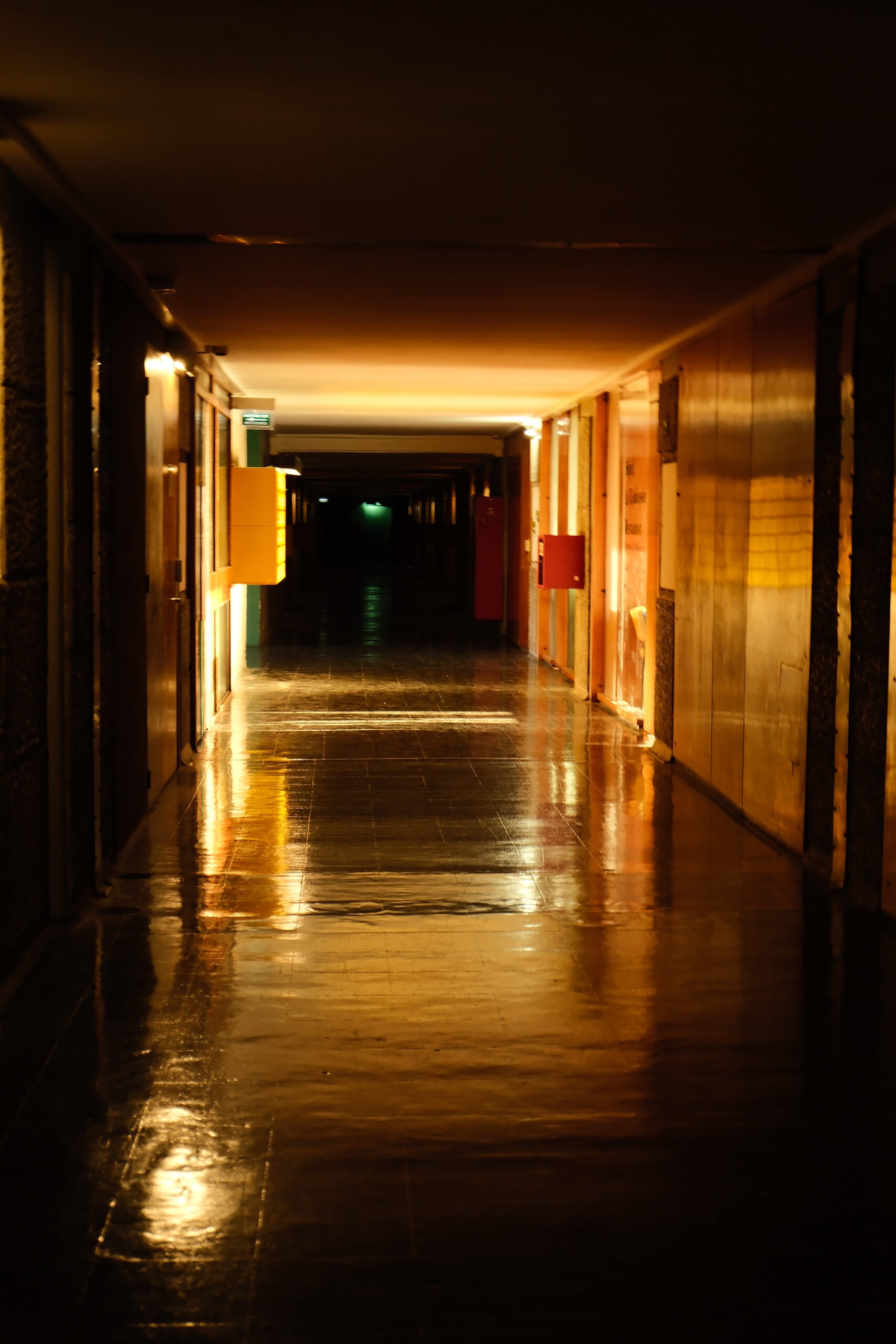
That mixture is what interested me most. The hotel isn’t sealed off in a tourist section of the building. It belongs to a working whole, alongside homes, shops, a nursery school and everyday routines. You book a room and, for a few hours, find yourself inside a city contained within a single building.
Apparently, residents don’t often eat at the building’s restaurant or pop into the hotel for coffee. They do, however, meet on the roof for drinks and picnics. I love that: walking upstairs with your neighbours, sitting above Marseille and doing it all without ever leaving home.
The best part of our stay came courtesy of one of Greg’s friends, who invited us inside two private flats. With the occupant’s permission, I photographed the second one; you can see the visit in my article inside a lived-in duplex at the Cité Radieuse.
A stop at Maison Mirbel
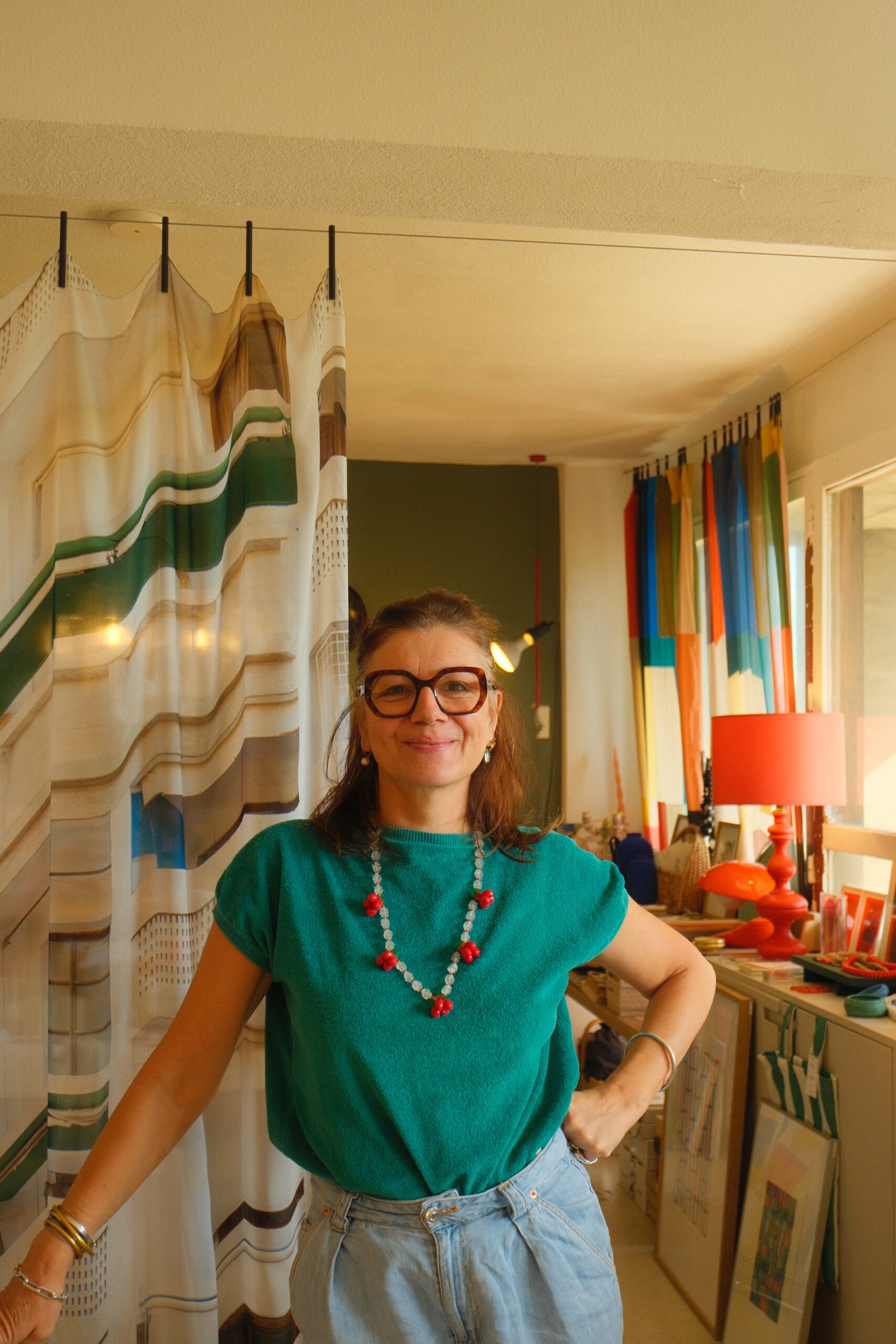
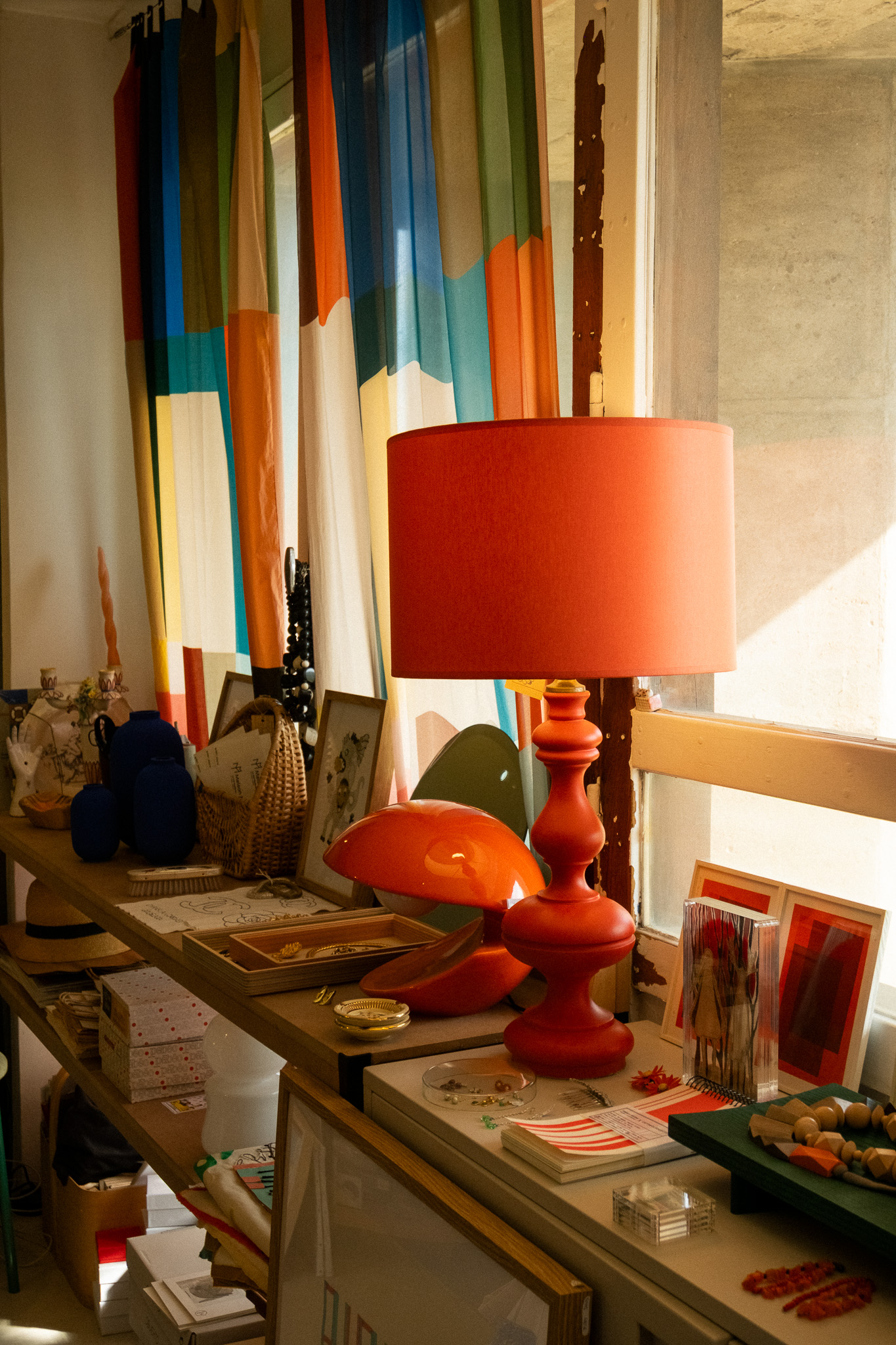
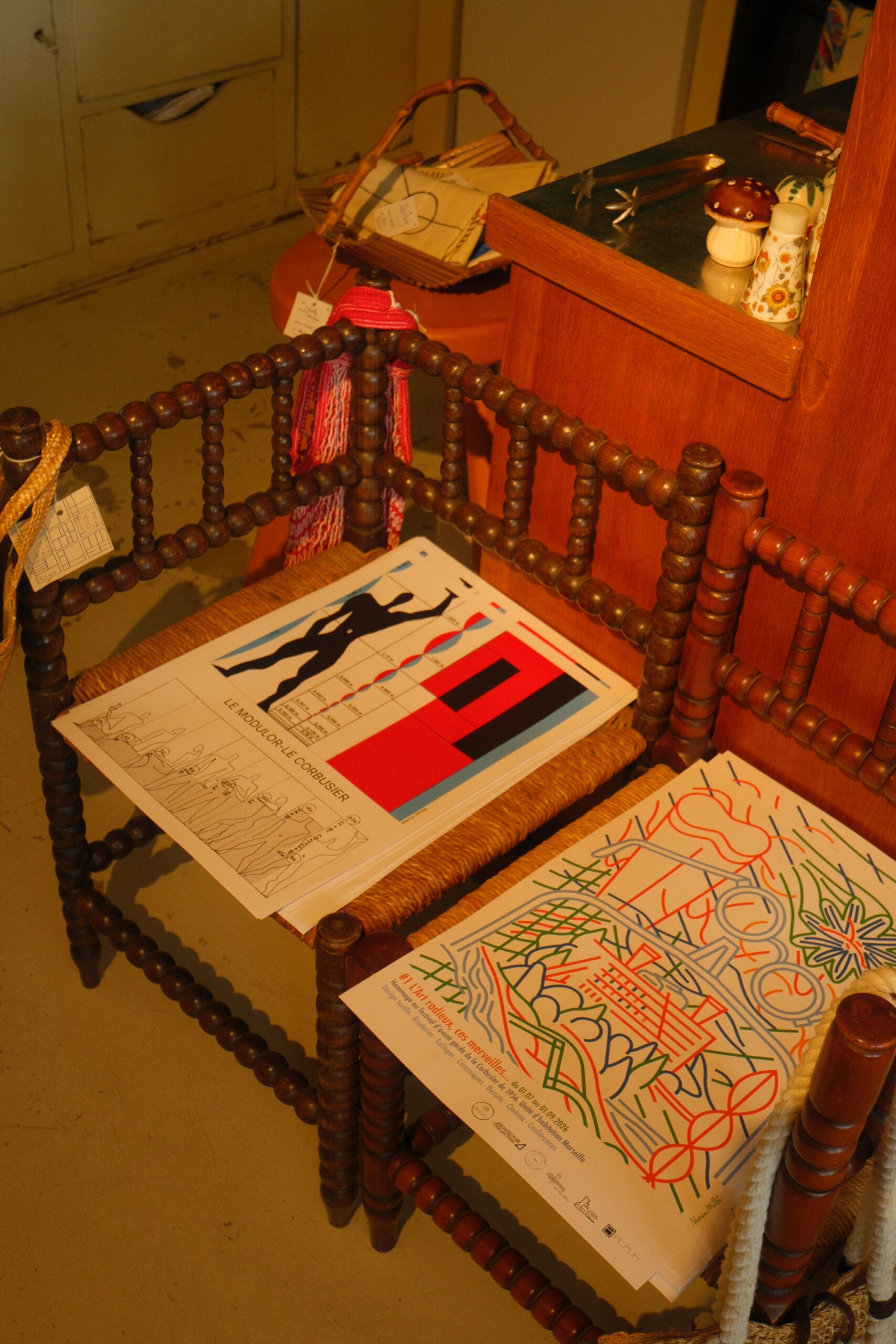
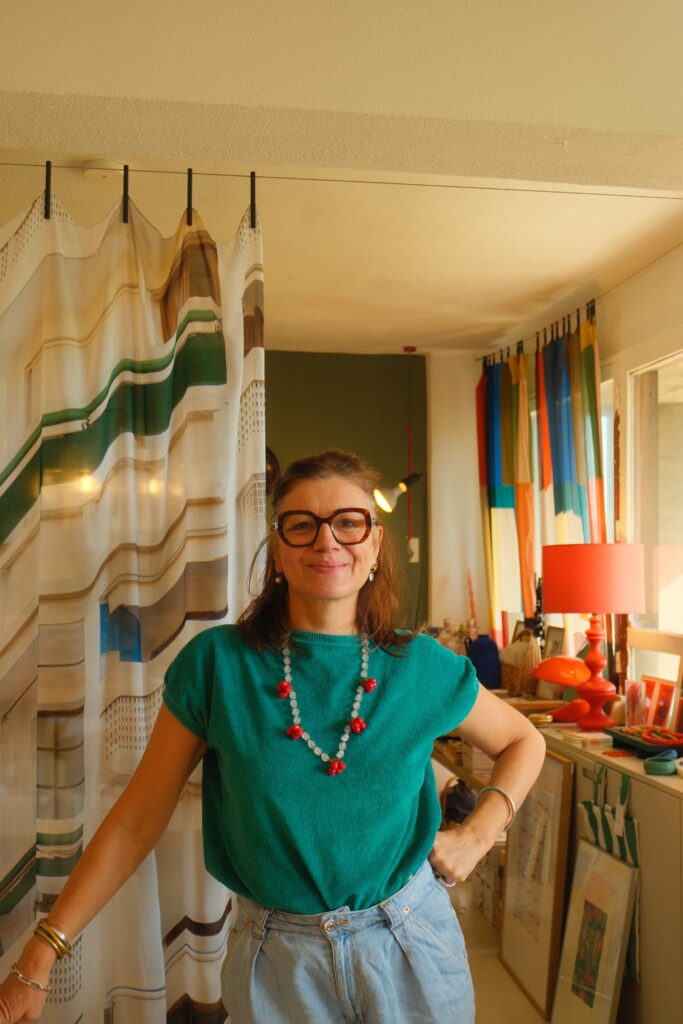
On the fourth floor, I stopped at Maison Mirbel, Virginie’s shop. Between the jewellery, screen prints, tote bags and tableware, I wanted to look at everything — and obviously buy everything too. We left with a Le Corbusier poster and a small notebook about the Cité Radieuse. Virginie happily let me photograph her and asked whether I was making a feature. I’ll tell you more about her, the shop and this wonderfully unlikely floor in a separate post.
On the roof: the swimming pool, the nursery school and the MAMO
The roof is well worth the trip up. After the dark corridors, you emerge above Marseille among the track, great concrete forms and the pool — or rather paddling pool — around which life in the building continues. Residents were doing yoga when we visited. Apparently, they also gather for drinks and picnics. Imagine having all of that on the roof of your own building.
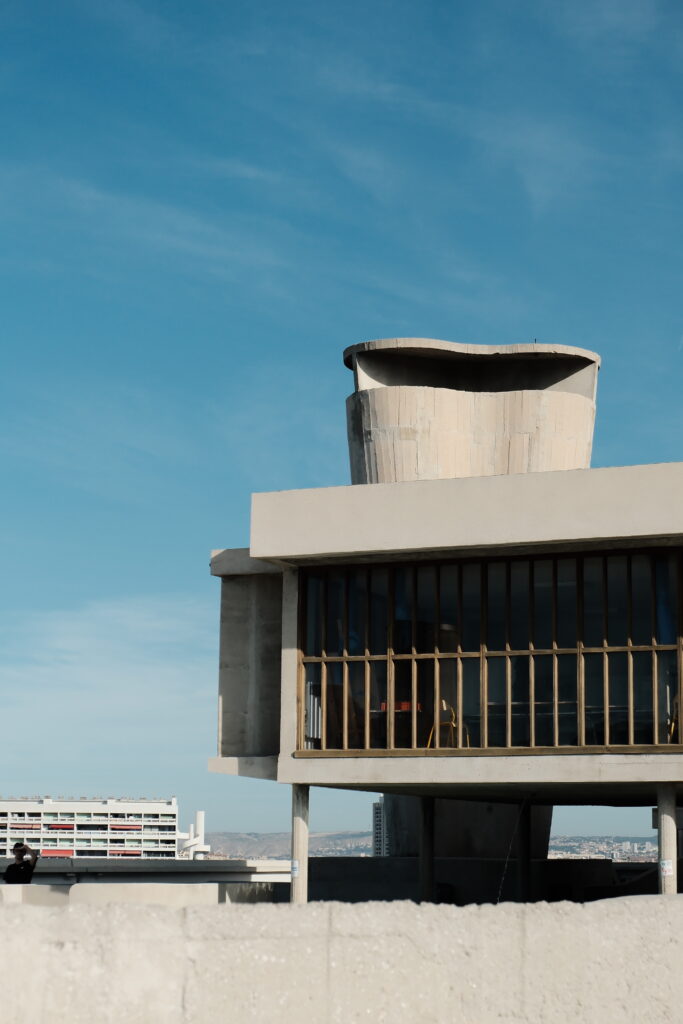
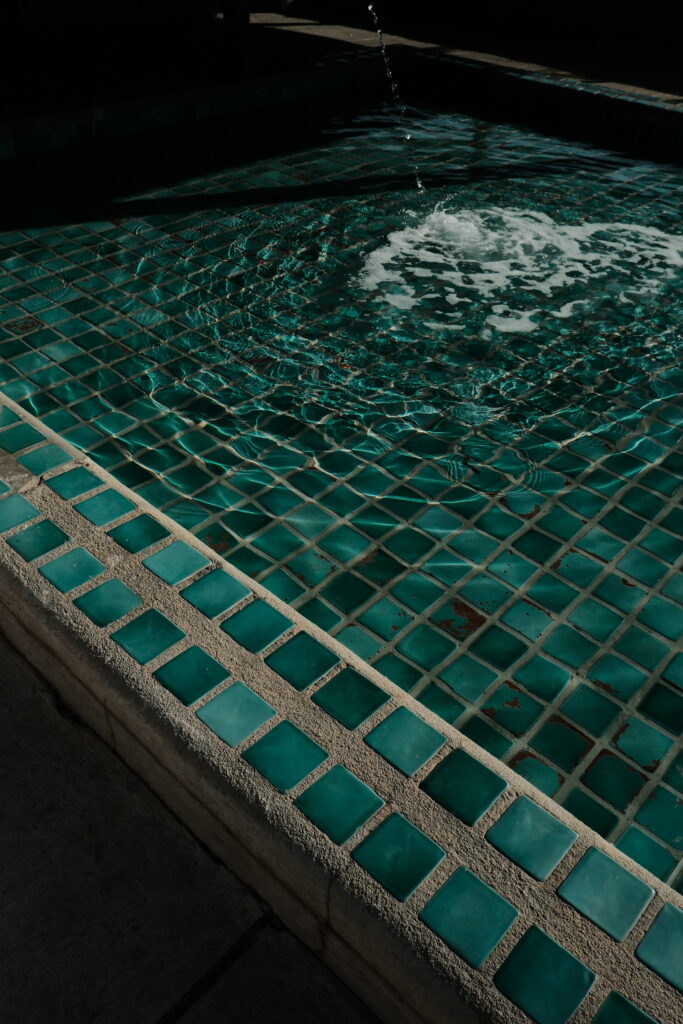
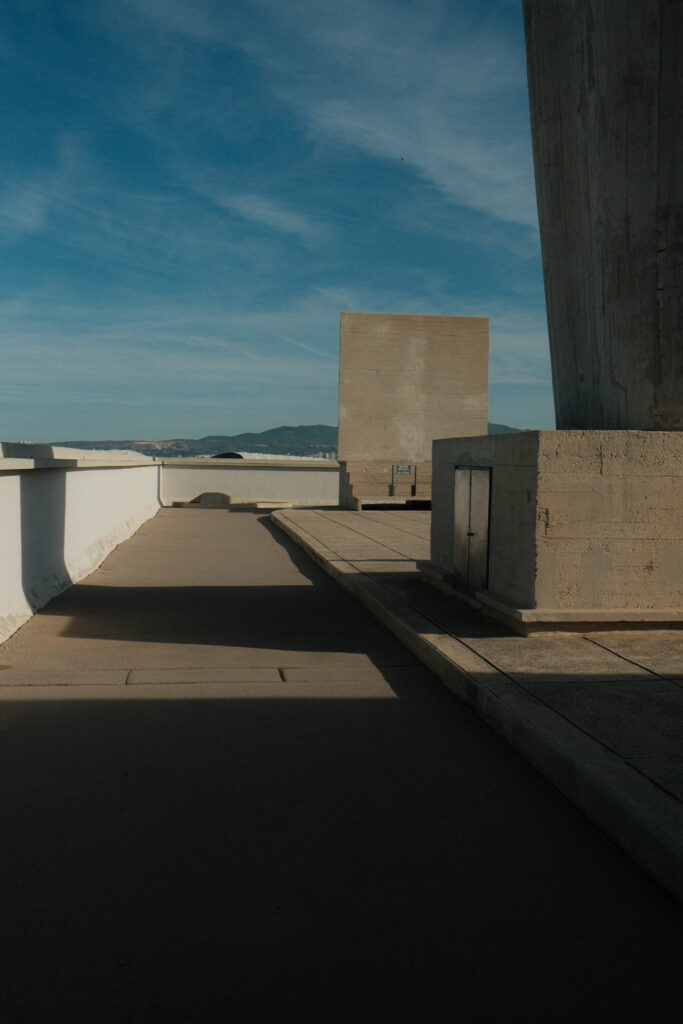
There is even a state nursery school at the very top of the Cité Radieuse. Its playground sits around the pool in an area reserved for children and residents. The school obviously isn’t open to visitors, but the idea of children taking the lift to class on the roof every morning still feels wonderfully surreal.
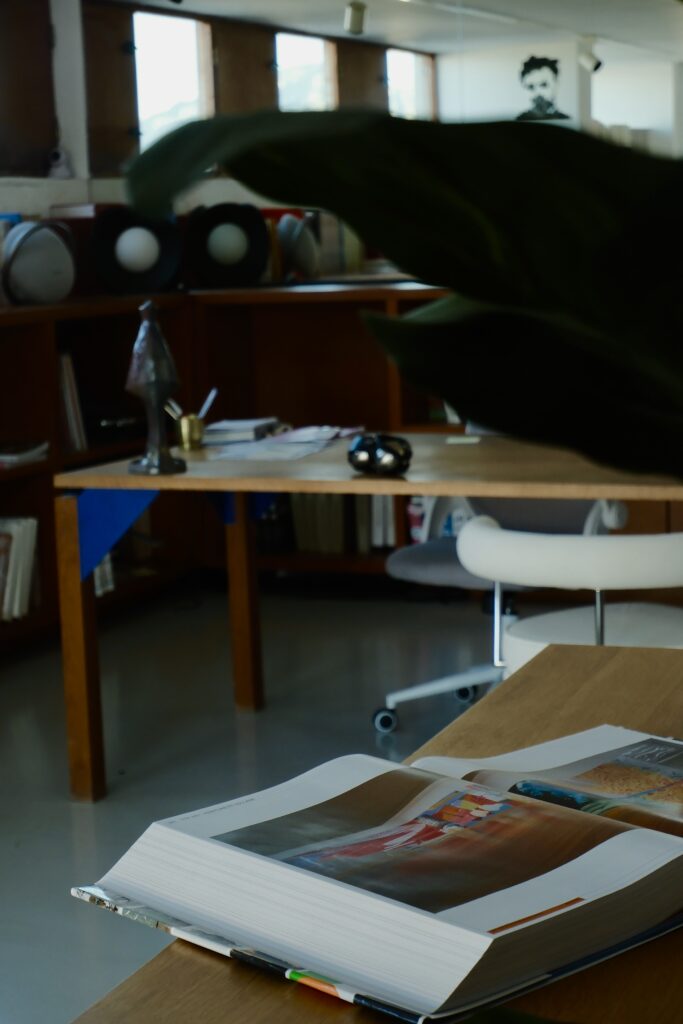
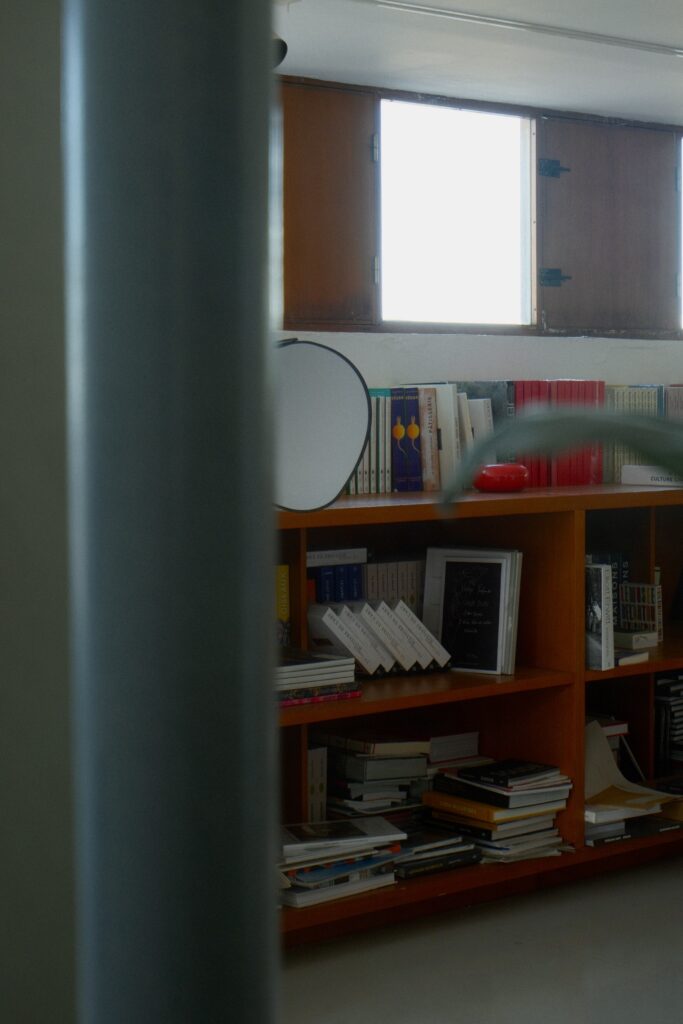
The former rooftop gym now houses the MAMO, the arts centre founded by Ora Ito. Lower down, along the internal streets, there’s also a bookshop with shelves devoted to architecture, design and Le Corbusier. Obviously, I was never going to leave without spending some time there.
Would I book again?
I’m glad I stayed because it allowed me to experience the Cité Radieuse as more than a passing visitor. I loved photographing the room, moving through the building and slowly understanding how everything fits together. That said, another night at €275 in the same conditions? I’ll admit, that would hurt.
You can love a place and still be honest about the experience. The building is absolutely worth seeing. The hotel has something no new property could reproduce because it genuinely sits inside Le Corbusier’s work. But an extraordinary address shouldn’t excuse everything else.
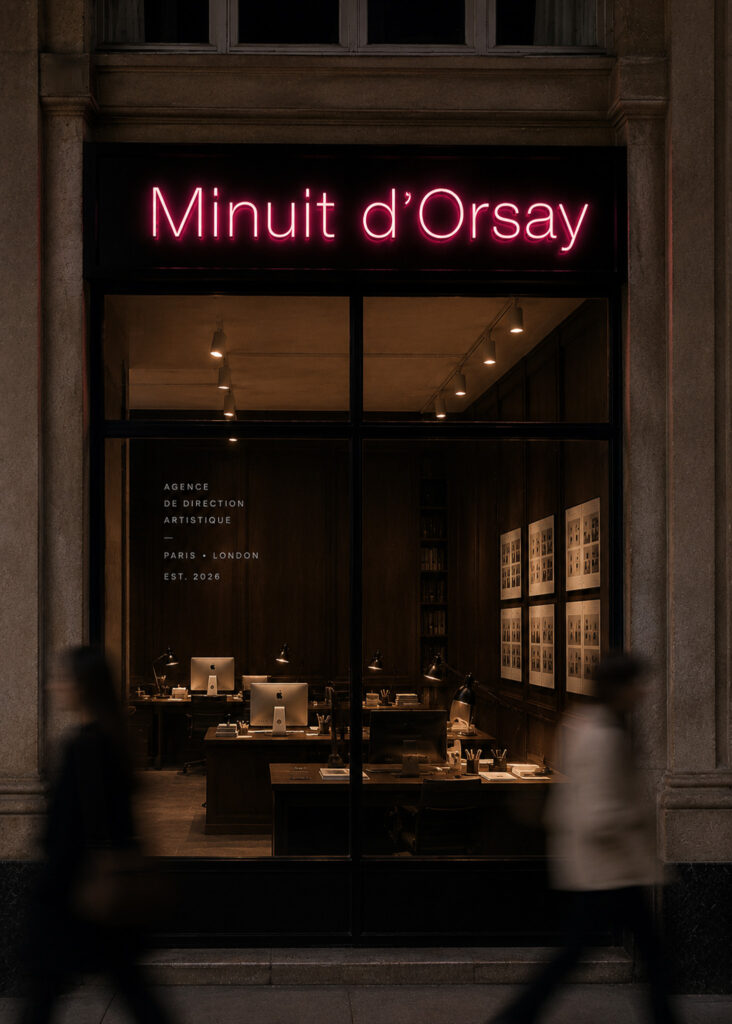
Between the room, the corridors and Maison Mirbel, I spent the weekend doing what comes naturally in my work as a web designer: noticing how a place tells its story through details, images and the people who bring it to life. Those are also the projects I love working on with Minuit d’Orsay. If you run a hotel, shop or independent venue and want to show it differently, you can write to me here.











0 commentaires
Be the first to leave a comment.
Comments are closed on this post.