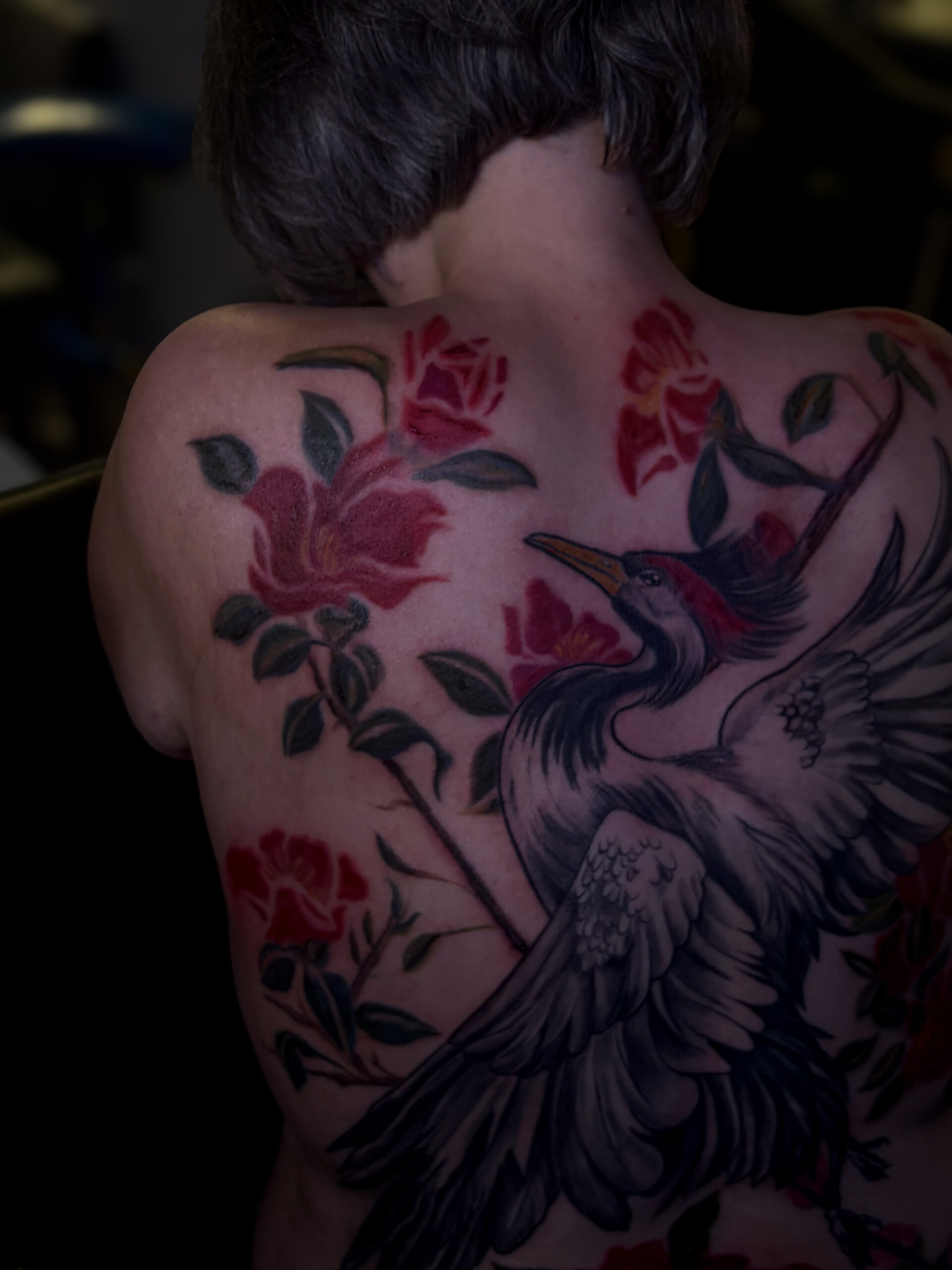
Aftercare for tattoos: healing properly to keep a tattoo sharp
A tattoo doesn't stop at the end of the session. What you see when leaving the studio is not yet the final result. The skin will evolve, rebuild itself, and it is this phase that will set the image.
A well-executed tattoo can lose quality if the aftercare is done poorly. Conversely, simple but well-applied aftercare helps to keep a tattoo clean, legible and stable over time. That is also why the choice of tattoo artist remains essential right from the start, just like the aftercare that follows (see my article for choosing a tattoo artist).
The first few days after getting a tattoo
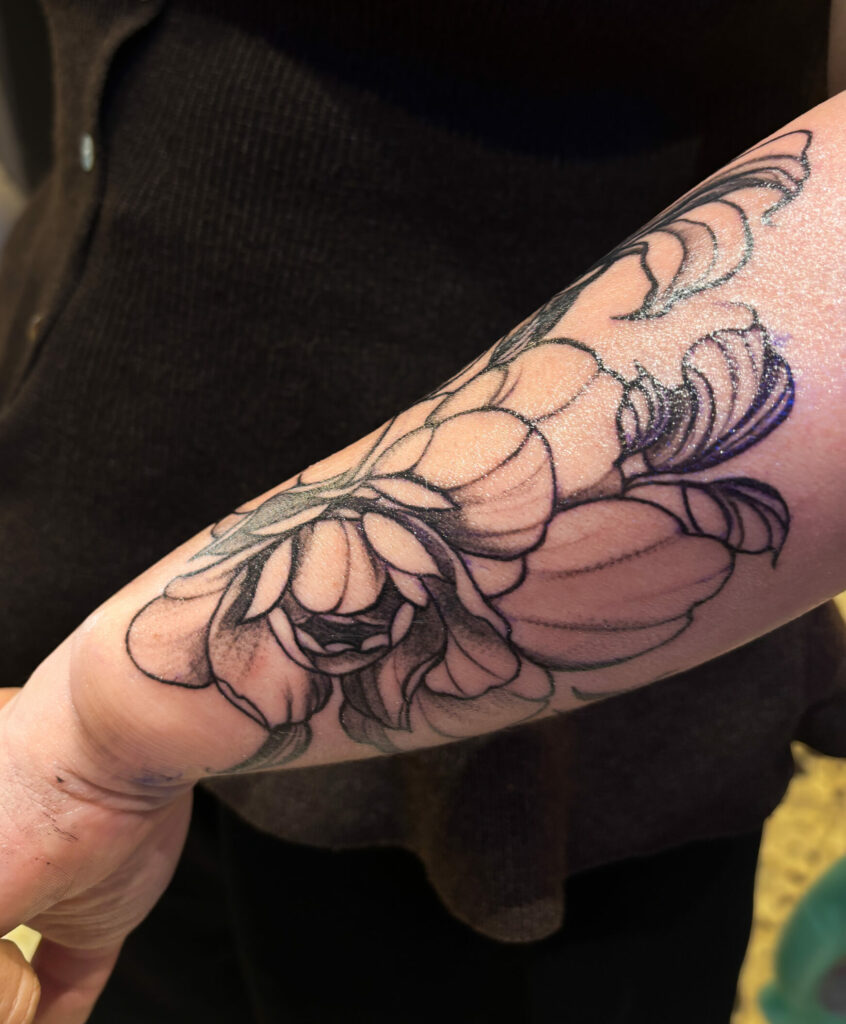
After the session, the skin is bound to be marked. It may be sensitive, slightly red, and sometimes warm. There may also be a slight discharge of ink or plasma. This is a normal reaction.
In the days that follow, the skin will dry out, feel tight, and then begin to peel. This phase is part of the healing process. You must not try to accelerate it or interfere, simply let the skin do its work.
The aftercare protocol for tattoos
Aftercare should remain simple and regular. The tattoo must be washed with lukewarm water and a pH-neutral soap, fragrance-free, to keep the area clean without being harsh on the skin.
After washing, dry gently without rubbing.
During the first three to four days, it is advisable to apply a spray-type product in the evening. Biseptine, while the skin starts to close properly. This step helps to reduce the risks without disrupting healing.
Once the skin is dry, a cream should be applied in a thin layer. Products like Aquaphor, Homéoplasmine or Bepanthen are suitable. I have tested several specific products, notably Cicaplast by La Roche-Posay — I detail my opinion in a article dedicated to Cicaplast cream for tattoos.
Following this initial phase, it is possible to move on to more specific treatments, notably a tattoo healing cream, which I detail in a dedicated article.
Allow the skin to heal naturally
At some point, the skin will peel and sometimes itch. This is a normal stage. You must not scratch or pick at the scabs. By intervening, you can remove pigment and alter the tattoo.
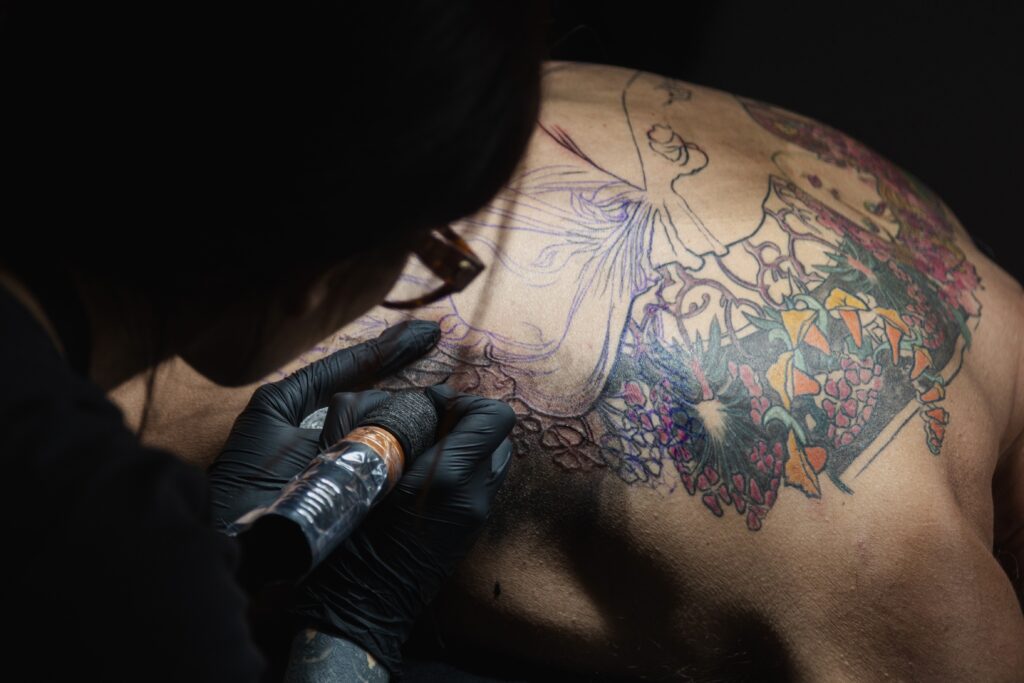
Healing also relies on this: letting the skin regenerate on its own.
Just like on the large back-piece projects I do, where healing is essential to maintain the legibility of the composition
What to avoid during the healing process
Certain things can disrupt the process and directly impact the result.
Sun exposure should be avoided, as it alters the pigments. Stagnant water, such as in baths or swimming pools, weakens healing skin. Excessive heat can also slow down the process.
Friction, particularly from tight clothing, synthetic fabrics, or wool, can irritate the area and compromise healing.
How long does it take for a tattoo to heal?
Surface healing generally takes 10 to 15 days. Even if the skin quickly appears closed, the tattoo continues to evolve beneath the surface.
The final result is not immediately visible. You have to give the skin time to settle for the image to regain its balance.
A simple yet crucial step
Aftercare for a tattoo isn't complicated, but it is essential.
They help to preserve the quality of the work carried out and ensure the tattoo lasts over time.
Healing also depends on how the tattoo was conceived from the start. On some rooms, that makes all the difference.
A well-cared-for tattoo stays sharp and legible. A poorly healed tattoo loses precision, and touch-ups are often necessary.
Proper care also preserves colour retention over time — a subject I explore in detail in my article on How a colour tattoo ages.



















0 commentaires
Be the first to leave a comment.