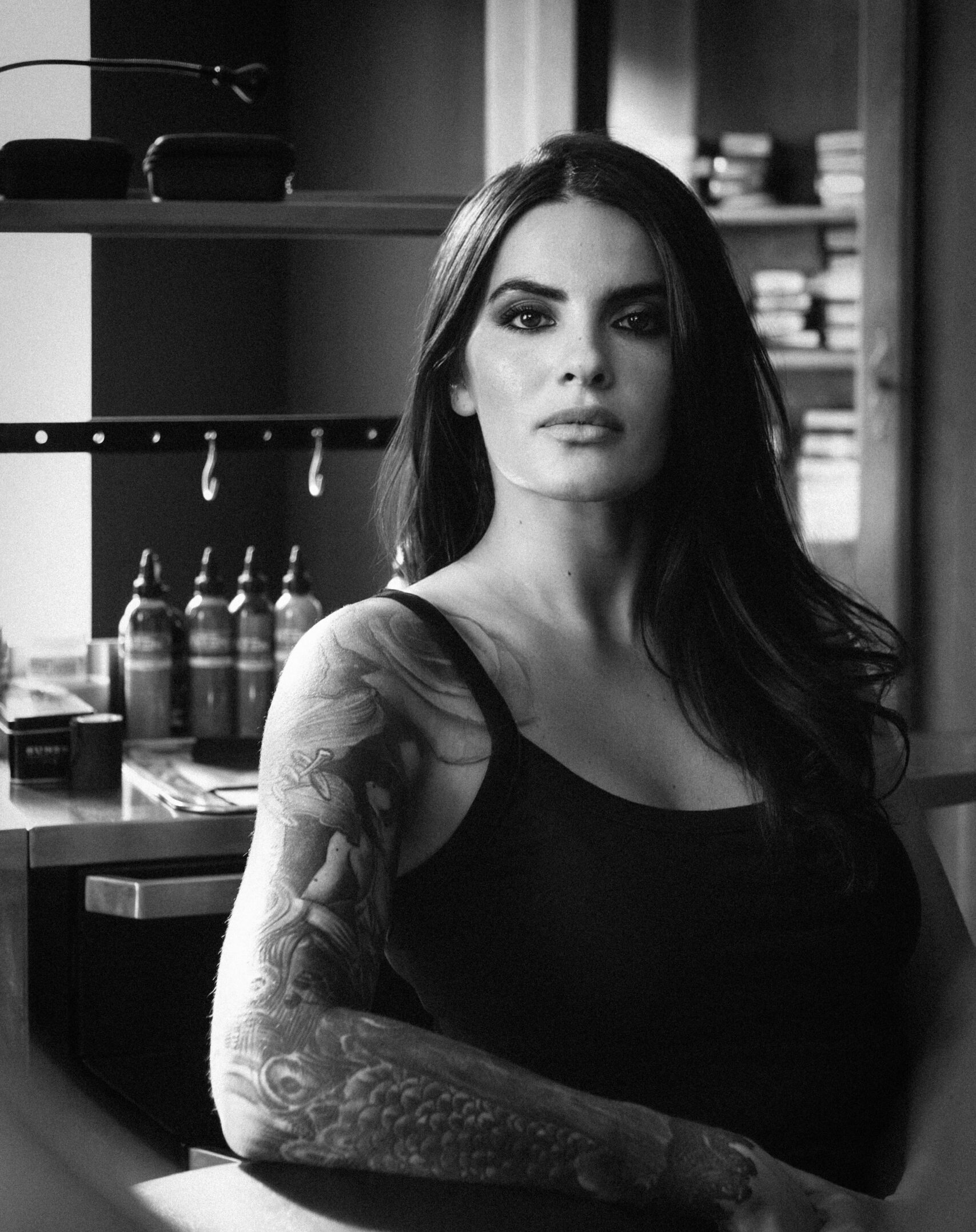
People often talk about artistic identity in tattooing as a direction to be found quickly. A style, an aesthetic, a recognisable way of working. Yet, things rarely build themselves like that.
Over time, I realise that an identity develops almost in spite of us. It is shaped through what we have been watching for years, the music we listen to, certain images that stick in our minds without us really knowing why. Everything ends up blending naturally into the way we draw and compose.
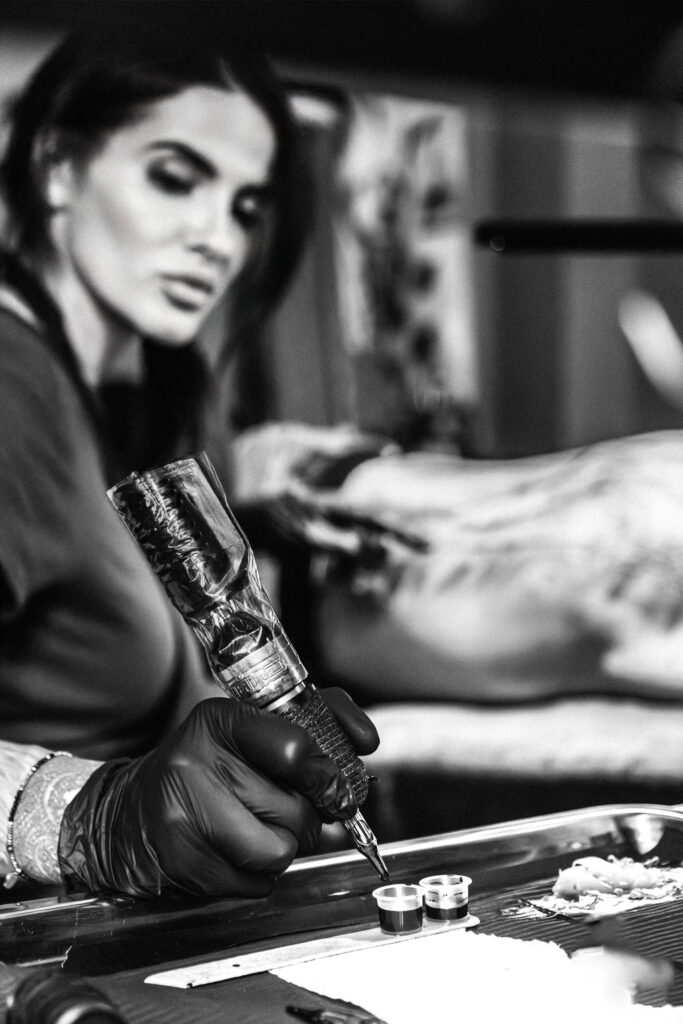
For a long time, I never thought in terms of style. I was mostly looking for images that stand the test of time, balanced compositions, something simple yet visually solid. A piece can be very technically polished and yet emit nothing. Conversely, some images remain self-evident without needing to overdo it.
Culture as an invisible foundation
Culture plays a massive part in that. Not as an accumulation of references to show off, rather as a silent foundation. Music, cinema, certain artistic figures or even certain attitudes inevitably influence our way of seeing things.
I talk about this more in the article dedicated to archetypes that shaped me, because they explain a part of my universe without relying solely on tattooing.
Building an artistic identity in tattooing often starts here: understanding what has been with us for a long time and naturally ends up inspiring our work.
Attitude before aesthetics
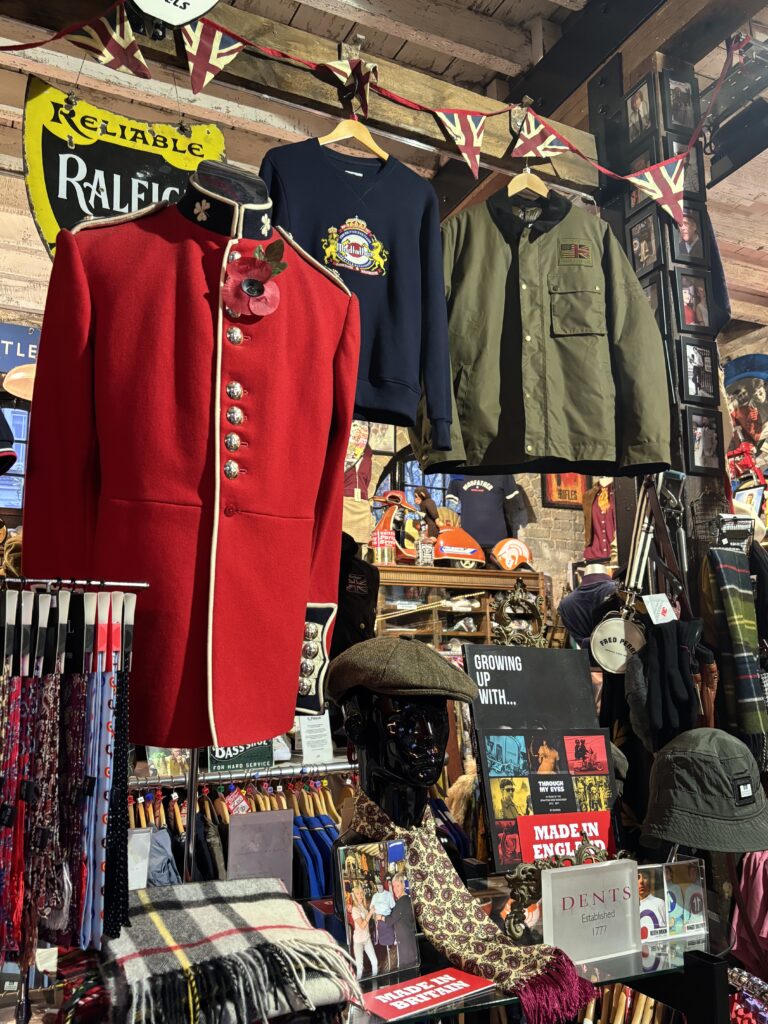
What touches me about certain artists is not just their work, but the consistency between what they create and the vibe they give off. Some people manage to impose a world of their own without needing to overdo it. You find that in music, cinema, photography or certain figures from British rock.
This way of occupying space inevitably influences the way an image is constructed. Not in the sense of "appearing", but in the fact of committing to a direction. That is what I found in the approach of Jeff Gogue at his seminar at Graphicaderme, total consistency between the technique, the universe and the attitude.
What this changes in the composition
In tattooing, this makes a big difference. When a design is based solely on aesthetics, it can quickly seem empty, despite the technical skill involved. Conversely, an image that has been thought through coherently often retains its impact over time.
The relationship with emptiness, contrast, movement or structure then becomes more important. I always try to construct pieces that sit well on the body, with a clear interpretation and a certain fluidity.
What this implies for the way I tattoo
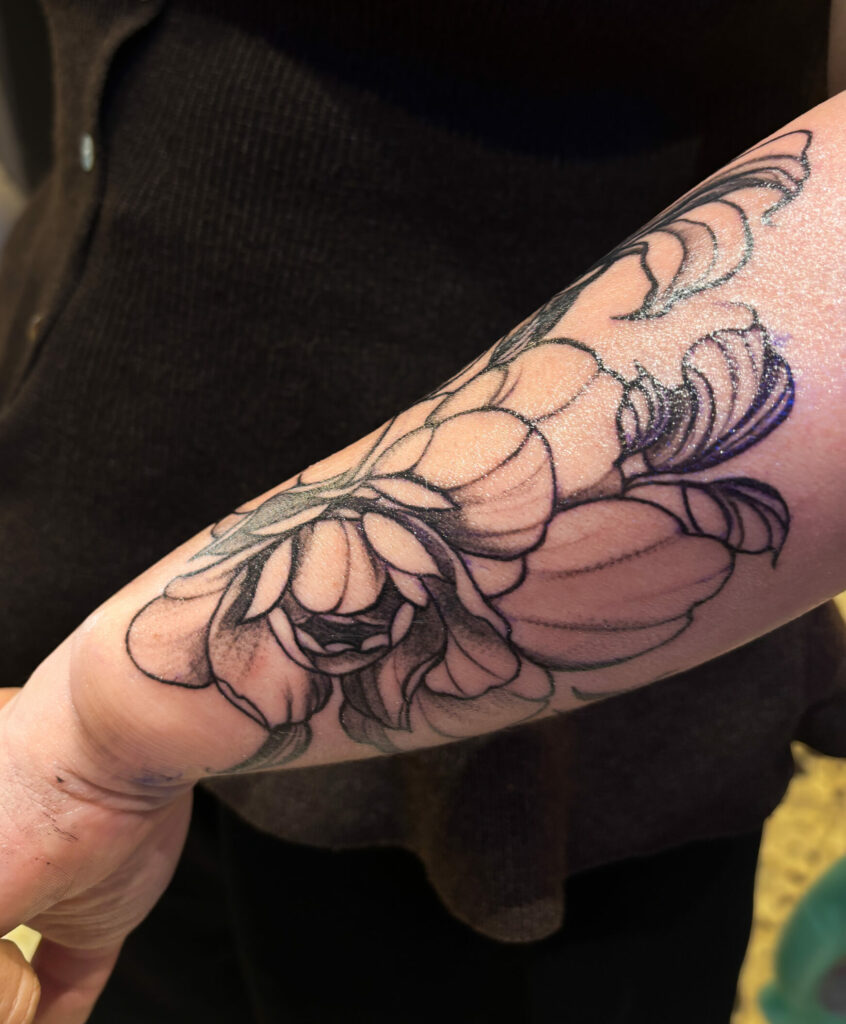
Today, Art Nouveau and Art Deco naturally occupy an important place in my work. I love their sense of composition, movement and detail. There is something very structured, yet also very vibrant.

These influences allow me to create more elegant and organic pieces, whilst keeping them truly legible on the skin. But behind this visible part, there is always something more instinctive, fuelled by the music, images and references that have stayed with me for a long time.
Building an artistic identity in tattooing also requires accepting not to follow every trend. An identity inevitably evolves over time, but it remains recognisable when it is based on something sincere.
Ultimately, it is rarely the passing trends that endure. It is the coherent universes, the ones that are recognised almost immediately without the need to explain them.
To discover more projects and compositions, you can also check out my portfolio.
What is an artistic identity in tattooing?
An artistic identity in tattooing is not limited to a specific style. It is based on personal culture, visual and musical influences, a stance and coherence in the way an image is composed. This is what makes a piece recognisable beyond trends.
What is the difference between a style and an artistic identity?
A style corresponds to an identifiable aesthetic framework. An artistic identity is deeper. It incorporates culture, attitude and the way of thinking about the image. Style can evolve over time, whereas identity remains the common thread.
How to develop one's artistic identity as a tattoo artist?
Developing one's artistic identity takes time and reflection on one's influences. It is about analysing what truly leaves a mark on us, understanding our relationship with the image and building consistency in our work rather than following a trend.
Do musical influences really influence tattooing?
Yes. Music influences energy, rhythm and artistic posture. It can be translated into the way a composition is structured, how contrast is managed, or how a more assertive presence is assumed in a piece.





0 commentaires
Be the first to leave a comment.