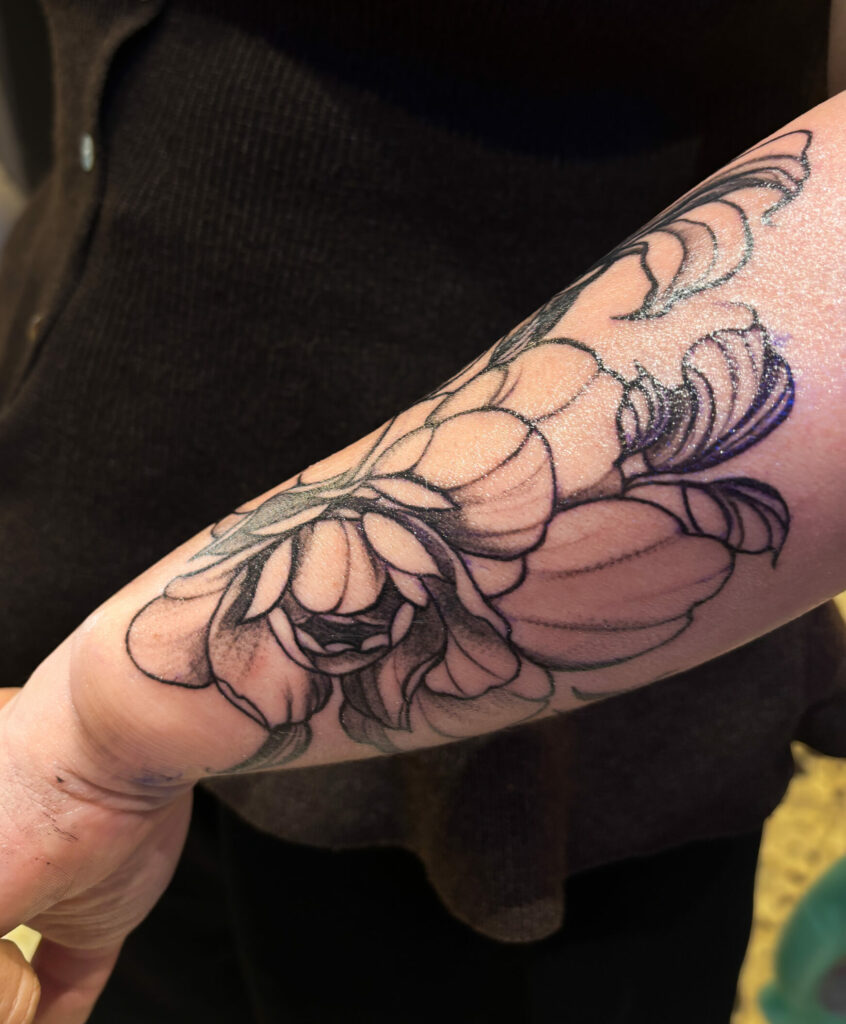
A few days after a session, the tattoo may start to feel tight, itch, and peel slightly. This stage often causes concern, especially for a first tattoo. However, it is generally part of the normal healing process.
The skin has just been treated and now needs to rebuild itself. During this period, the result may appear less defined, drier, or slightly dull. You should not try to accelerate the process.
Why does a tattoo itch?
Itching often appears when the skin begins to repair and renew itself.
The tattoo may appear dry or tight. Small flakes of skin may also peel off, similar to after mild sunburn. This does not mean the ink is disappearing.
The main rule is simple: don't scratch.
Even when the itching becomes bothersome, you should avoid scratching, repeated rubbing, and tight clothing. Scratching a still-fragile area can tear off a scab too soon, irritate the skin, and locally alter the result.
Is it normal for a tattoo to peel?
Yes, slight peeling is common during the healing process.
Small coloured flakes may detach during cleansing or cream application. Their appearance can be striking, but they correspond mainly to the outermost layer of the skin.
It should neither be shot nor scrubbed.
The dead skin should fall off on its own. The tattoo may momentarily appear lighter or covered by a light veil. Its appearance will gradually stabilise as the skin finishes healing.
Should I put cream on when my tattoo is itchy?
A thin layer of a suitable treatment can help reduce feelings of dryness and discomfort.
However, the cream must not cover the tattoo in a thick layer. An excessive amount will keep the area constantly moist and can encourage the appearance of small pimples or irritation.
The product should be applied with clean hands, to skin that has been previously washed and gently dried.
I will explain the use of the Cicaplast during tattoo healing, as well as the time at which to begin its application.
How long does the itching last?
They generally appear during the first few days of healing and can accompany the phase during which the tattoo peels.
The duration varies depending on the skin, the size of the piece, the tattooed area and how it is maintained. A large, heavily detailed tattoo may take longer than a small piece with little filling.
Visible scarring represents only part of the process, however. Even when the surface appears to have healed, the skin continues to regenerate more deeply.
To go over all the steps in order, consult the Aftercare guide.
Can you pat an itchy tattoo?
It's best to leave the area alone.
When the sensation becomes uncomfortable, gentle pressure with a clean palm is less aggressive than scratching with fingernails. However, you should avoid constantly tapping the tattoo or handling it excessively.
A warm shower, a gentle wash and the application of a tiny amount of cream can be enough to soothe the skin.
Avoid very hot water, which can accentuate the feeling of dryness and itching.
Are small scabs normal?
Thin scabs may appear during healing, particularly on areas that have been worked on more.
They should remain relatively light and fall naturally. They must never be pulled off, even when they appear to be almost detached.
A thick, moist, or oozing crust, however, warrants more attention. It may be related to irritation, excessive cream, or a complication that requires professional advice.
When should you worry?
Mild itching and peeling skin are generally normal. However, some signs should prompt you to contact your tattoo artist quickly and, if necessary, a doctor:
- a redness that continues to spread ;
- a pain that increases instead of decreasing ;
- a strong sensation of heat ;
- a significant swelling ;
- a thick or foul-smelling discharge; ;
- blisters or vesicles ;
- of fever or an unusual general condition.
Very intense itching, blisters, or oozing can indicate a reaction or infection and should not be treated solely with more cream.
If in doubt, a photograph sent to the tattoo artist can provide an initial opinion, but it does not replace a medical consultation when symptoms are significant.
What to avoid during this period
As long as the tattoo is not healed, avoid baths, swimming pools, saunas, sun exposure, and clothing that constantly rubs the area.
Also, do not overdo the products. Gentle cleansing and simple care are generally preferable to a succession of creams, oils and disinfectants.
The best way to preserve a tattoo is to let the skin do its job, without scratching, stripping, or suffocating it under too much product.
To properly prepare for a first session and anticipate this period, you can also find my advice in How to prepare for your first tattoo.
If you are concerned about the appearance of your tattoo after a session with me, you can contact me. contact directly including a clear photograph taken in natural light.
Yes. Mild itching is common during healing. You should not scratch the area.
The superficial layer of the skin renews itself. Small flakes of skin may detach for several days.
Yes, thinly. Too much cream can keep the skin too moist and cause breakouts. You can also find my tips on Cicaplast for a tattoo.
The itching usually lasts a few days, depending on the skin, the size of the tattoo and the area worked on.
Check if the redness is spreading, if the pain is increasing, or if there is significant heat, swelling, discharge, or fever.

0 commentaires
Sois la première personne à laisser un commentaire.
Les commentaires sont fermés pour cet article.