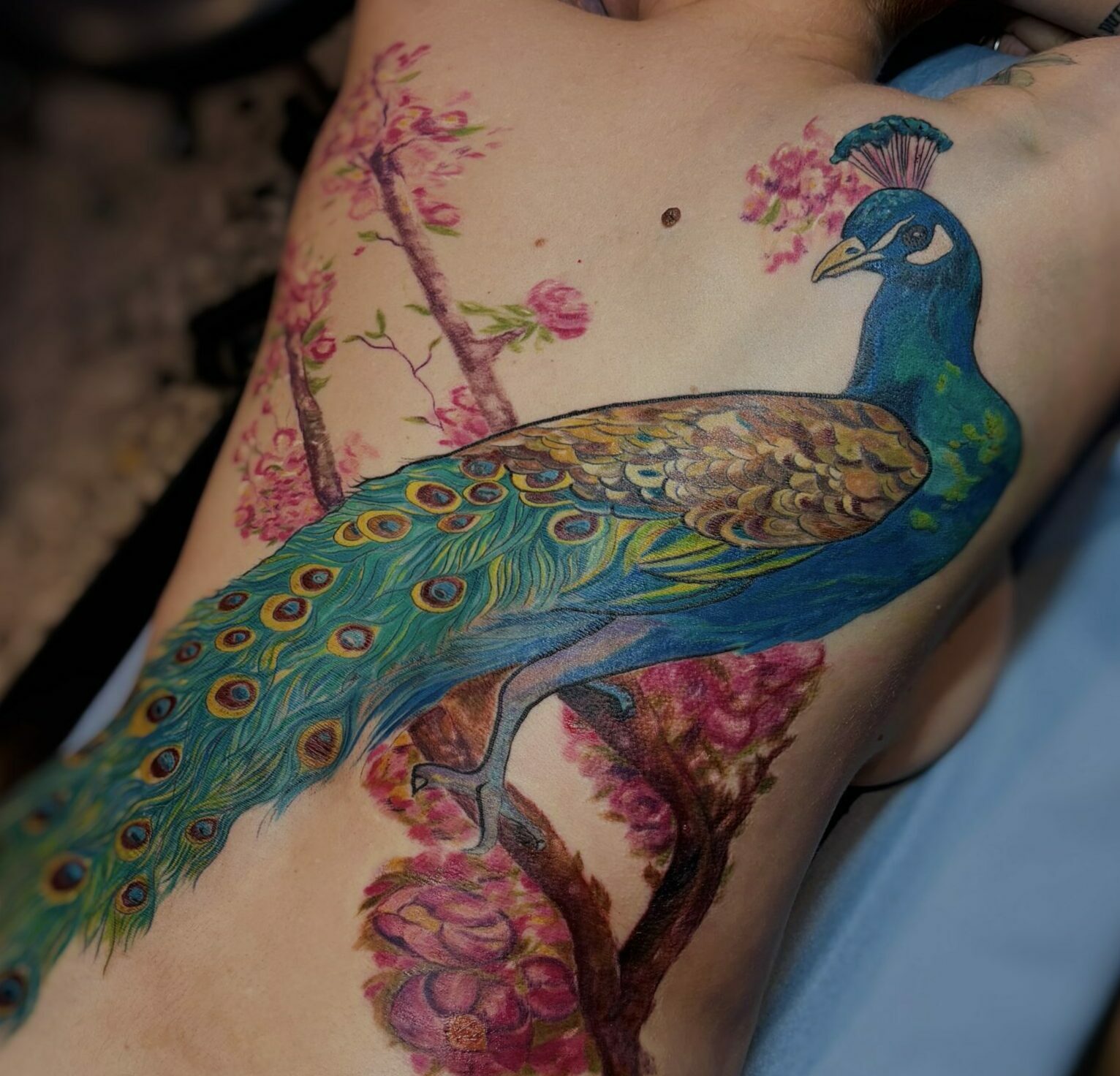
An approach to tattooing conceived as a constructed image
A tattoo is not just a design that is applied to the skin. According to an Ifop study, 1 in 5 French people are tattooed today, and the trend is accelerating among 25-35 year olds.
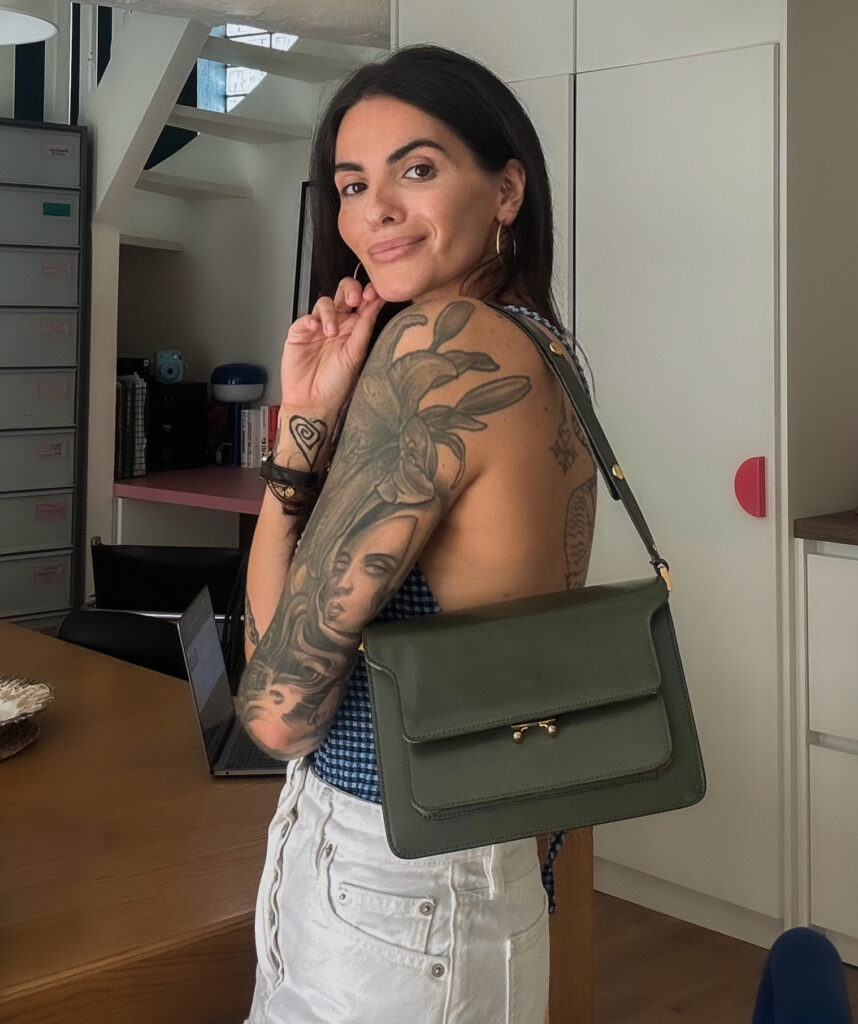
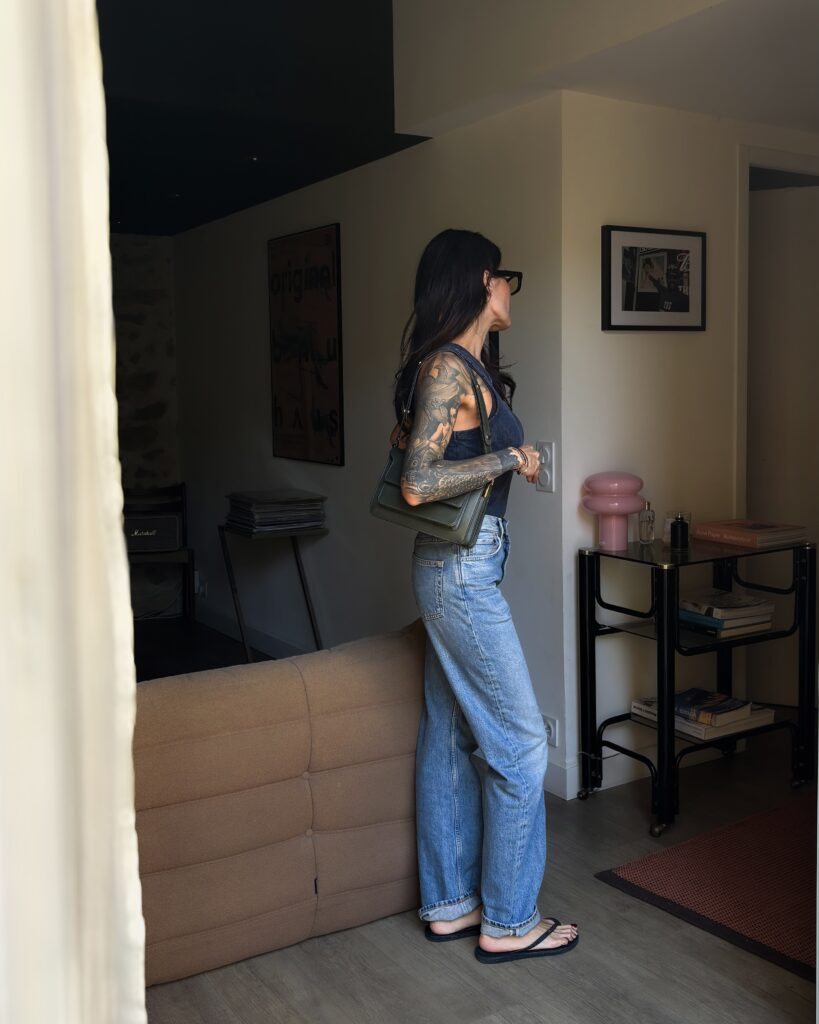
It is a Constructed image, thinking for a specific body, for a specific area, and for the time that will pass on it. It's this way of working that guides my projects today. What interests me is not just the drawing itself, but the way it registers on the body, the way it accompanies a line, a posture, a movement, and the way it will continue to live in the years that follow.
In Avignon, requests can be very varied. Some people arrive with a very clear idea, others with a still vague desire, an atmosphere, a reference, an emotion or simply the intuition that a project needs to take a certain form. In both cases, the work begins in the same way: understanding what needs to remain, what needs to evolve, and what will allow the image to be just right on the skin. A tattoo can be beautiful on paper and lose its impact once transferred to the body. That's the whole challenge.
Working from images, including painting
I often work from personal ideas, visual references, image fragments or entirely bespoke projects, but I also sometimes start from paintings. As Alphonse Mucha said: "Line is the foundation of all composition." It is this principle that guides every project.
Some works already possess a tension, a construction, a way of guiding the eye that opens very strong avenues for tattooing. It's not simply a matter of taking an image as it is, but of understanding what gives it its presence and seeing how that force can be transferred to the skin.
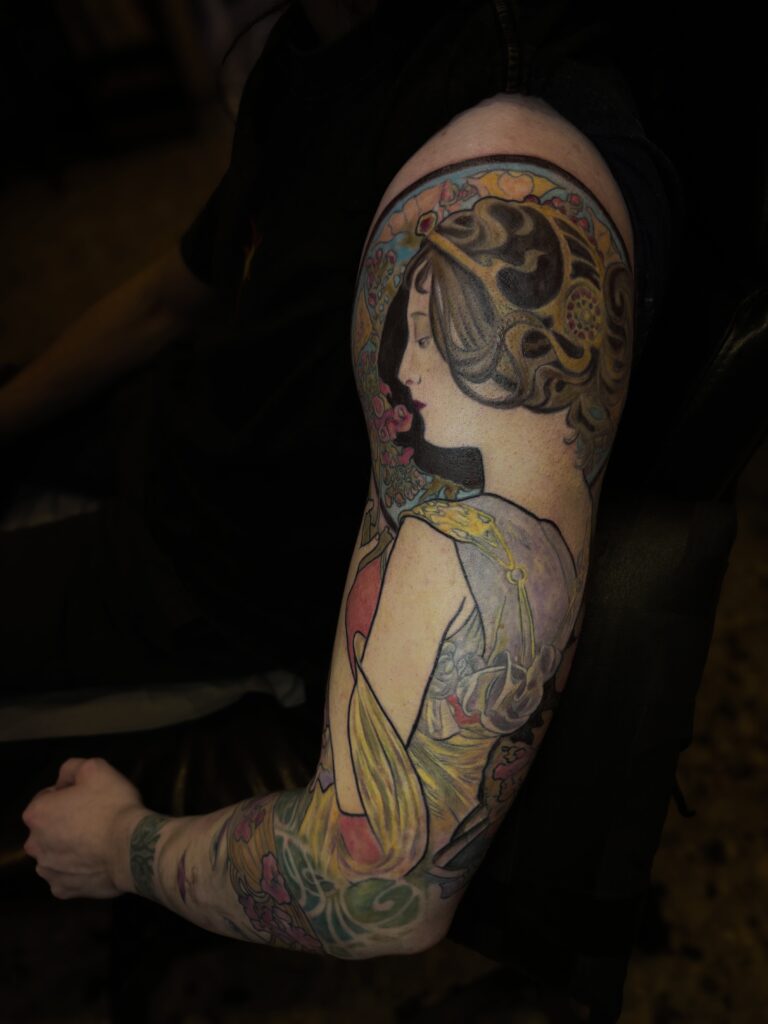
Artists such as: Alphonse Mucha, for the fluidity of the lines and the composition, Tamara de Lempicka, for the structure and strength of the shapes, or Édouard Bisson, for a certain pictorial softness, naturally nourish my mind. Other references, more marked by light and contrasts, like Caravaggio, as well as Dali for its madness, can also come into play depending on the projects. What interests me in these universes is never gratuitous quotation, but the way in which an image can be transformed, moved, reinterpreted to really work on the body.
Between Art Nouveau, colour and neo-traditional
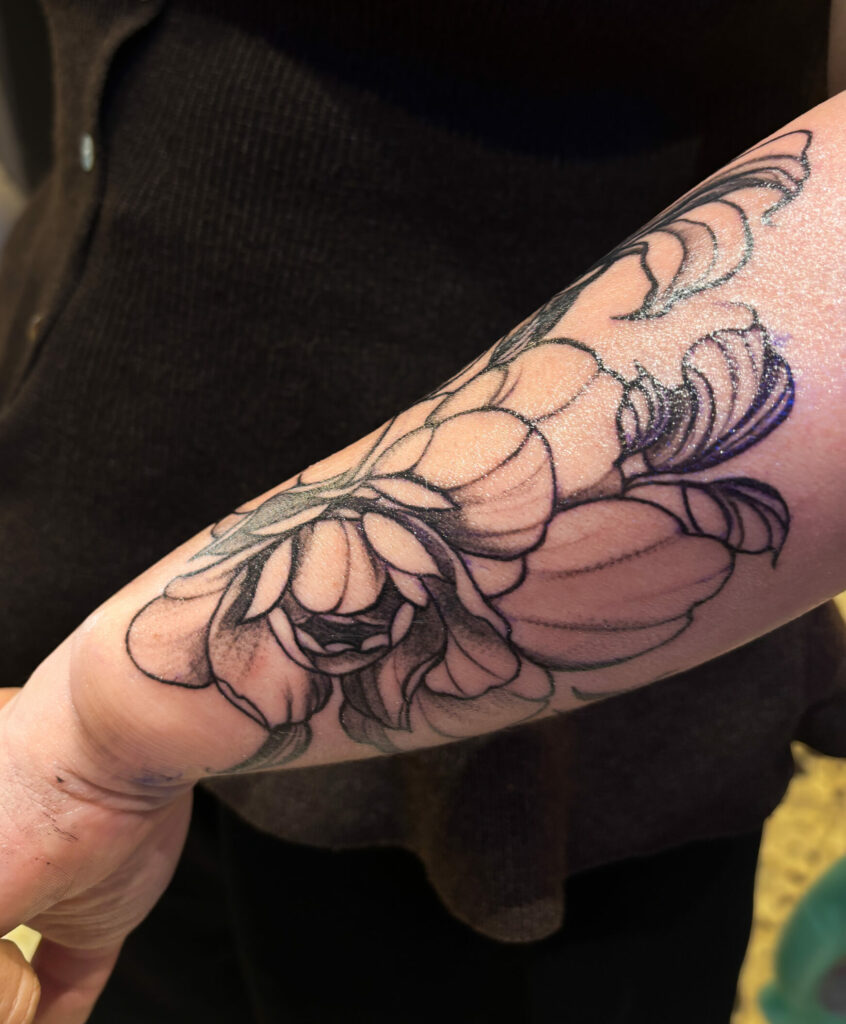
My work is often at the crossroads of several directions.’Art Nouveau returns for its flowing lines, its movement, its ability to create organic compositions that fit the body well. The colour I'm interested in the depth, the contrasts, the light and all that it allows to open up in a room. The neo-traditional, He, on the other hand, brings a structure, readability, and solidity that remain essential when considering a tattoo over time.
These influences are not there to pigeonhole the work. They intersect differently depending on each project. Some pieces will be more structured, more decorative, more fluid. Others will have something more direct, more pronounced, more grounded. What matters is always the coherence of the whole, the way an image holds up, breathes, and retains its presence.
According to the Victoria & Albert Museum in London, Art Nouveau is the first truly international style, born in Europe, it crossed continents without losing its identity.
Projects conceived for the body and for time
to think about a tattoo is also to think about its long-lasting. Reading a piece, the space left for certain contrasts, the balance between masses, the circulation of the gaze, all of this counts as much as the initial idea. A tattoo doesn't need to be overloaded to be strong. It needs to be right.
Getting a tattoo in Avignon
The projects are carried out at Avignon, at Graphicaderme, at 29 rue Thiers, 84000 Avignon, by appointment. If you have a specific idea, a reference in mind, a project inspired by a painting, or simply a direction you'd like to explore, you can directly fill out this form.
The choice of style depends on the project and how it should integrate with the body. Some approaches, like Art Nouveau, colour, or neo-traditional, allow for the creation of pieces with movement and good longevity.
Yes, some paintings can serve as a basis for work. The important thing is to adapt them so they work on the skin, by re-working the lines, the contrasts and the composition.
Longevity depends on several factors: the construction of the tattoo, the balance of contrasts, the body area, and aftercare. A well-thought-out composition remains legible for longer.
It’s not necessary. A direction, a desire, or a few references are enough to start building a coherent project.
The simplest way is to send a message with the area to be tattooed, any references you might have, and some information about the project so that we can suggest a suitable direction.

0 commentaires
Be the first to leave a comment.
Comments are closed on this post.