A surface that speaks before words
The body as a cultural surface is never neutral. Before any explanation, it already carries signals, codes, and history. The way someone stands, moves, dresses, shows themselves or hides tells more than what they claim. The body is a surface where culture gets written, sometimes consciously, sometimes without even noticing.
Across societies and eras, the body has always been used as a carrier of meaning. Clothing, adornment, hairstyles, rituals, gestures, scars, posture. None of it is random. The body becomes a visible space, exposed to other people’s gaze, but also to your own. It sits between the intimate and the public, between what is personal and what is collective.
Between personal identity and collective codes
What makes the body so culturally powerful is that it always lives between two forces. On one side, it is deeply personal. It belongs to someone’s story, sensitivity, limits, desires. On the other side, it is crossed by social codes, norms, and references that change depending on time, class, place, and community.
A body is rarely read only as itself. It is read through a context, through what culture projects onto it. Certain silhouettes, attitudes, and ways of presenting the self become iconic for a period, then disappear, or return in another form. The body becomes a mirror of its time, even when it tries not to.
When the body becomes an image
The moment a body is looked at, it becomes an image. And like any image, it gets interpreted, judged, misread, desired, rejected, copied. Cinema, music, and fashion have turned the body into a cultural language. Some figures are recognised instantly by a stance, a silhouette, a way of occupying space. The body is not only something you are; it becomes something you signify.
This does not always require exaggeration. Sometimes the strongest presence comes from something restrained. A detail is enough. A posture. A look. A refusal to over-explain. Here again, it is less about style than about presence.
The body and style are connected — I explore this in What Style Will Never Say For You.
A living surface, never fixed
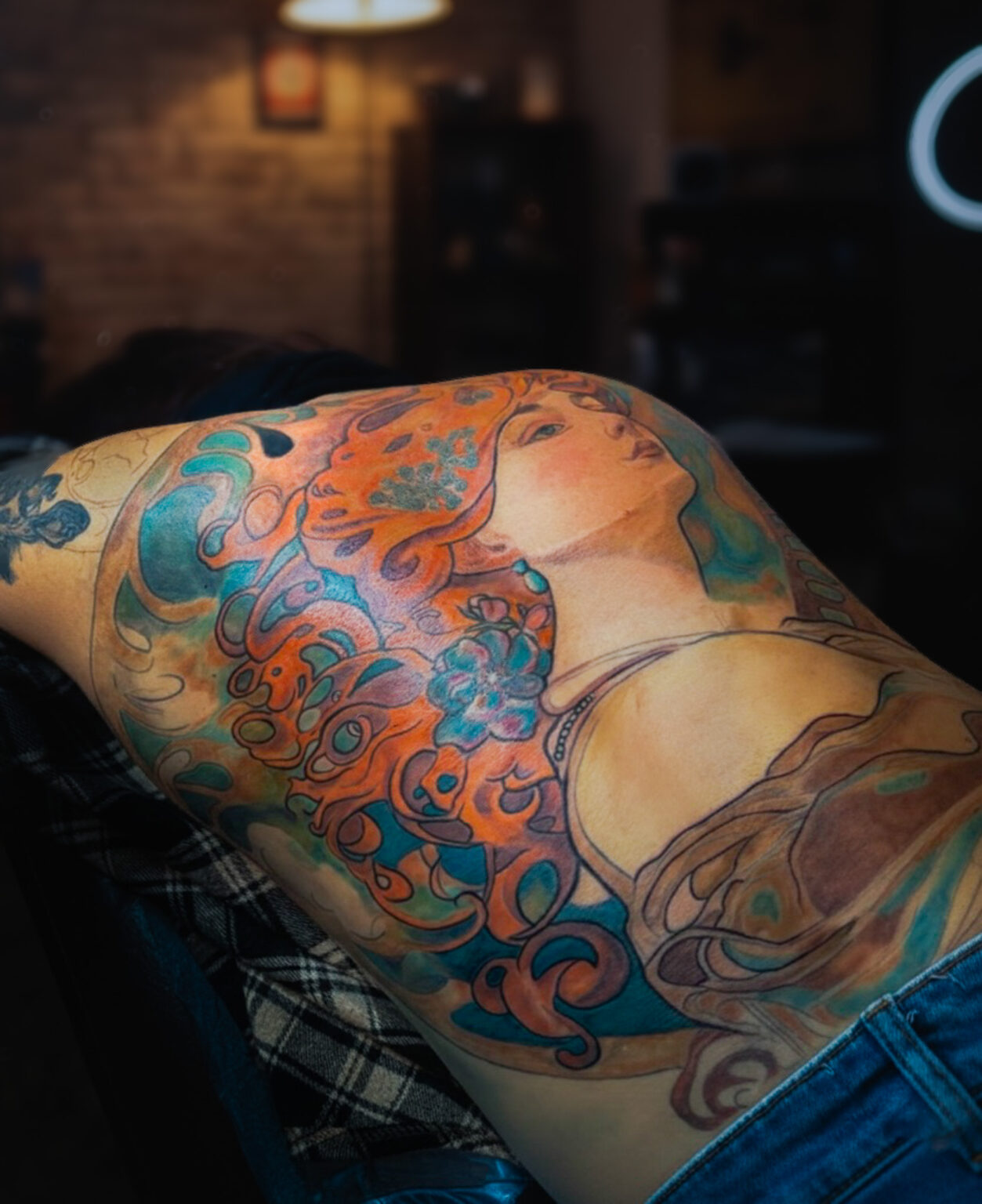
Unlike a canvas or a wall, the body is a living surface. It moves, it ages, it changes, it carries time. Anything placed on it evolves. That is what makes it culturally unique. Culture does not sit on the body like a label. It gets absorbed, shaped, softened, sometimes sharpened. The body does not preserve meaning exactly as it was. It translates it.
This is why the body forces a different way of thinking about images. It demands respect for time, movement, and transformation. It leaves no room for the fantasy of a perfect, frozen form. The body insists on reality.
The body as a place of choice
Using the body as a cultural surface is not always about provocation or visibility. Often it is about choice. Choosing what to reveal, what to keep private, what to claim, what to refuse, what to shift or reframe. The body becomes a site of decision, sometimes deliberate, sometimes instinctive.
In a world saturated with screens and borrowed images, the body remains one of the few spaces where culture can still be written in a direct way, without mediation. It is seen, judged, read, but it is also a territory that cannot be fully standardised.
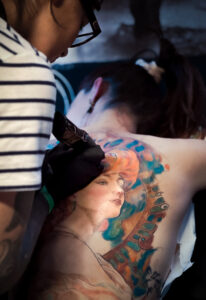
This is also what builds an artistic identity in tattooing.
A surface that carries time
If the body remains central in culture, it is because it sits at the meeting point between the individual and the world. Codes evolve, references change, but the body keeps acting as a contact zone between the personal and the collective, the visible and the invisible. The body is not only a surface. It is a passage.