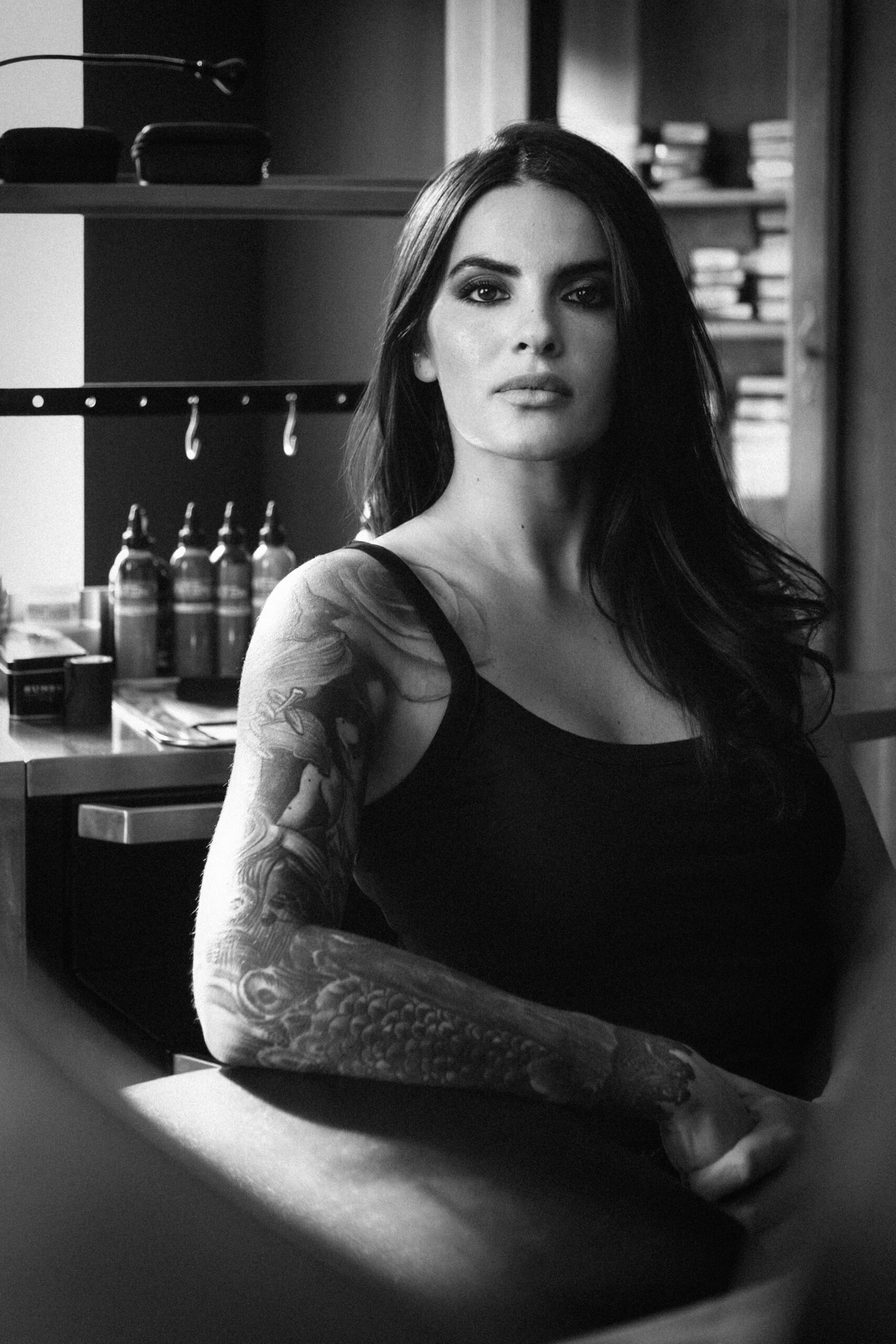
Why Artistic Identity Matters in Tattooing
People often talk about style in tattooing, as if choosing a category were enough to define a body of work. Yet style is only the surface. An artistic identity is built much deeper. It does not come from following a trend or adopting a dominant movement. It develops over time, through culture, references, images and figures that leave a mark on us, sometimes without us even realising it.
For a long time, I never thought about tattooing in terms of style. What has always guided me is presence. An image has to exist fully, without needing justification. It should stand on its own, without explanation. This idea goes far beyond tattooing. It comes from everything I absorbed long before drawing my first line.
Culture as an Invisible Foundation
No one creates from nothing. We create from what we have listened to, watched, admired or even rejected. Music, cinema and certain artistic figures shape an inner landscape that eventually influences the way we compose an image. These are not decorative influences. They are points of reference. They shape a posture, a way of occupying space, and a refusal to constantly seek acceptance.
I explored the archetypes that shaped me in another article, because they explain an essential part of my universe. They speak about tension and restraint, impact and calm, the contrast between a strong aesthetic and a more silent attitude. All of this feeds directly into my work, even when it is not immediately visible.
Link to the article: The Archetypes That Shaped Me
Building an artistic identity in tattooing begins there: recognising that the visual and musical culture we carry within us influences every decision, every line and every composition.
Attitude Before Aesthetics
What moves me in certain artists is not only their work, but their attitude. That ability to exist without asking permission, to impose an image without smoothing it to please others. This posture can be felt in British rock, but also in certain cinematic or pictorial approaches. It creates coherence between the person and the image they produce.
In tattooing, this changes everything. Working purely from an aesthetic point of view can produce something technically controlled, but sometimes empty. Working from an assumed identity gives an image a different density. The composition becomes more structured, clearer. The relationship to space, contrast and texture begins to make sense. The image is no longer only decorative. It carries an intention.
What This Means in My Tattooing
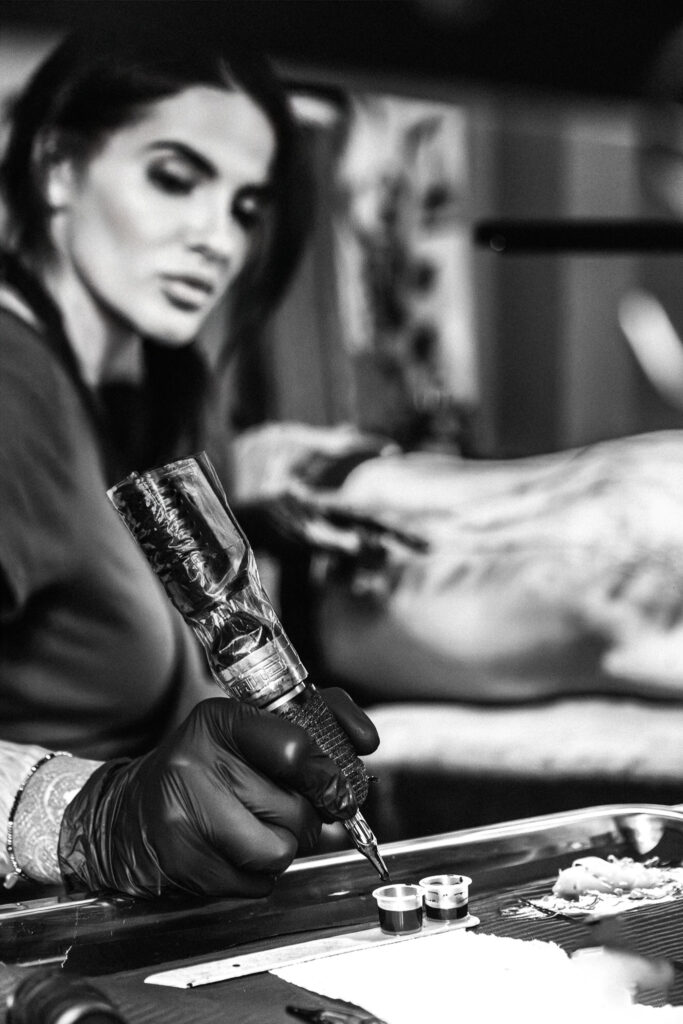
I do not begin with a style to reproduce. I begin with an intention and a search for coherence. I look for clear presence, solid construction and controlled tension.
Today, Art Nouveau and Art Deco accompany my work because of their formal precision, their sense of structure and their demand for balance. But behind these visible influences lies a wider, more instinctive culture that gives character to each piece.
Building an artistic identity in tattooing means accepting that you will not follow every passing trend. It means choosing coherence over immediate popularity, and allowing time to refine a personal signature. An identity evolves, but it remains recognisable because it is built on solid foundations.
In the end, it is not the trend that leaves a lasting mark. It is the signature that emerges from a mixture of culture, posture and presence, and that eventually becomes recognisable without needing to be explained.
What is an artistic identity in tattooing?
An artistic identity in tattooing goes beyond a specific style. It is built from personal culture, visual and musical influences, attitude and coherence in the way an image is composed. This is what makes an artist’s work recognisable beyond trends.
What is the difference between style and artistic identity?
A style refers to a recognisable aesthetic framework. An artistic identity is deeper. It includes culture, attitude and the way an artist thinks about images. Style may evolve over time, while identity remains the underlying thread.
How can a tattoo artist develop their artistic identity?
Developing an artistic identity takes time and reflection. It requires analysing the influences that truly shape us, understanding our relationship to images and building coherence in our work rather than simply following trends.
Do musical influences really affect tattooing?
Yes. Music influences energy, rhythm and artistic posture. It can translate into the way compositions are structured, how contrast is used or how strongly an image asserts its presence.
Should tattoo artists follow trends to succeed?
Trends can bring short-term visibility. Building a strong artistic identity allows an artist to develop a lasting signature and attract people who are looking for a coherent vision rather than a temporary trend.
Can an artistic identity evolve over time?
Yes. An artistic identity naturally evolves as an artist gains experience and new influences. However, when it is built on strong cultural and visual foundations, it remains recognisable even as the work changes.