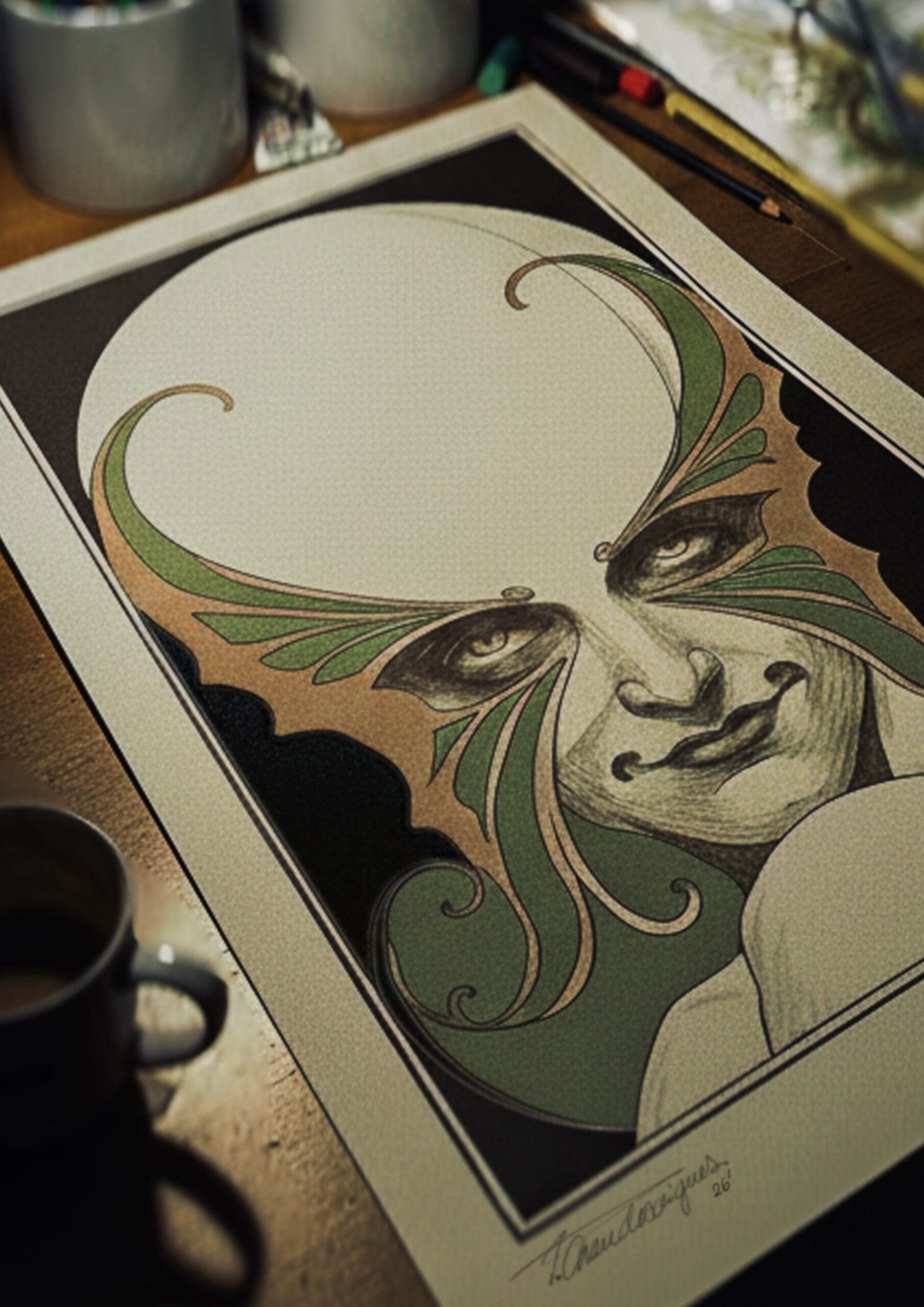
When art stops being a destination
At a certain point, art stops being something you go to see and becomes something you come across. It is no longer confined to museums, dedicated spaces or clearly defined frames. It appears elsewhere, in a street, on a façade, through a poster, a gate, a typeface, sometimes without being clearly identified as art. And very often, this is where it works best. When art steps outside museums, it loses a certain comfort. It is no longer protected by context, by discourse, by explanation. It has to stand on its own. It has to exist without being justified. Either it holds, or it does not.
A presence woven into everyday life
What happens then is that art stops being a sacred object. It becomes present. Not spectacular, not demonstrative, simply present. It integrates into everyday life, into the environment, sometimes quietly, but it leaves a mark. Art Nouveau is a clear example of this approach. It was never meant to remain enclosed. It existed in buildings, metro entrances, objects, architectural details. Lines became part of the landscape. People did not necessarily stop to look, but they lived with them. Over time, the eye was shaped without even realising it.
Images that take their place
This way of working reappears later in other forms of visual culture. Concert posters, record sleeves, independent graphic design, certain punk or rock images operate according to the same logic. These are images that do not ask for permission to exist. They are there. You pass by them. You accept them or you reject them, but you cannot pretend they are not there. When art exists outside, it becomes more demanding. It cannot afford to be fragile. It needs a structure, a line, a coherence capable of holding over time. Otherwise, it fades, dissolves into the flow, blends into everything else.
What remains when context disappears
This is often why some images remain while others disappear. Not because they are more beautiful or more impressive, but because they hold better. They can be seen every day. They accept wear, time, movement. They continue to exist without needing to be explained. When art steps outside museums, it changes its role. It is no longer there to be admired from a distance. It is there to exist, to accompany, to become part of the world. And perhaps that is precisely where it feels most accurate.